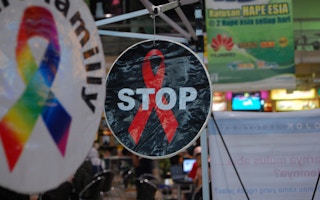


Thirty years ago, when the international community marked the first World Aids Day, we thought we would never turn the tide against HIV. But after millions of deaths and years of fear, we now have effective strategies to prevent transmission and bring testing and treatment to those in need.
To continue reading, subscribe to Eco‑Business.
Access all our exclusive content and archive — with a 7-day free trial. Then just US$5/month. Cancel anytime.
- Exclusive access to training across business and policy topics
- Direct access to industry leaders at Eco-Business events
- A seat among the decision makers shaping the region's sustainable development
And yet, despite the remarkable progress made during the last three decades—or perhaps because of it—we must avoid the temptation to declare the fight against Aids almost over. In many parts of the world, the hardest work is just beginning.
Since the turn of the century, many of the advances against HIV were enabled by the Millennium Development Goals (MDGs), a 15-year policy roadmap that made reducing the spread of the virus a top priority. This led to an unprecedented expansion of prevention and treatment services, particularly in developing countries. Progress was swift and when the Sustainable Development Goals (SDGs) succeeded the MDGs in 2015, ending Aids was no longer a standalone goal. Rather, further progress had become one of 169 targets that the SDGs are supposed to achieve by 2030.
But the transition from a “goal” to a “target,” combined with steep declines in Aids-related deaths, has lulled us into a false sense of accomplishment. Today, many argue that Aids is nearing its end. Unfortunately, nothing could be further from the truth.
HIV is a complex issue. Biomedical responses are vital to disease control, but if people cannot access medicine or preventive services, even the best-designed initiatives will fail. What’s more, the obstacles to treatment often have nothing to do with health care, but rather, are tied to political, economic, and social marginalisation. For example, it can be difficult to lower rates of infection in countries where gender inequality prevents women from making decisions about when, where, and even with whom they have sex.
To be sure, in many parts of the world, HIV is now considered a chronic disease manageable with medication and lifestyle changes; that fact alone is worthy of celebration. Nonetheless, millions of people still do not know their HIV status or cannot get the support they need when they test positive. If the world is ever to overcome HIV/Aids, we must find ways to close these gaps.
Above all, that means integrating the struggle against HIV more fully into sustainable-development planning. When governments work to implement the SDGs in areas like social protection, food security, and gender-based violence, HIV responses must also be part of their plans. Only by linking HIV strategies to the issues that predispose people to infection—such as poverty, education, and gender bias—can we hope for a future free from Aids for everyone, everywhere.
We have a long way to go before that happens. For example, just last month in Tanzania, hundreds of lesbian, gay, bisexual, and transgender (LGBT) people were forced into hiding after a city official in Dar es Salaam warned that a taskforce was being created to identify and punish gay people. With LGBT groups on the frontlines of Tanzania’s HIV-prevention efforts, any threat to their members’ human rights is also a threat to the HIV response.
“
Only by linking HIV strategies to the issues that predispose people to infection—such as poverty, education, and gender bias—can we hope for a future free from Aids for everyone, everywhere.
Nor is Tanzania the exception. On the contrary, as a recent report by my organisation highlights, the situation is especially dire in the Middle East and North Africa, where forced sex within and outside of marriage is pervasive. These coercive and often violent encounters increase women’s risk of exposure to HIV.
Those on the frontlines of the Aids response have always recognised that the disease cannot be overcome in isolation; rather, it must be addressed through an interconnected set of social, cultural, economic, and legal challenges. That is why activists have spent years working to repeal discriminatory laws, develop education programmes to improve sexual and reproductive health, and build networks of supporters who understand that HIV does not discriminate by nationality, sexuality, or economic status. As we continue to tackle the disease, we must not forget the inclusive approach that brought us to this point.
The mantra of the SDGs is “leave no one behind.” At the moment, however, many of those most vulnerable to HIV are being forgotten and will be left behind. Today, HIV infection rates are highest among the poor and socially marginalised, underscoring the fact that as long as the SDGs are unmet, the “goal” of ending the scourge of HIV/AIDS will remain elusive.
Christine Stegling is Executive Director of the International HIV/AIDS Alliance.
Copyright: Project Syndicate, 2018.
www.project-syndicate.org