
Asia Pacific‘s leading platform for sustainable development
11. Sustainable cities and communities
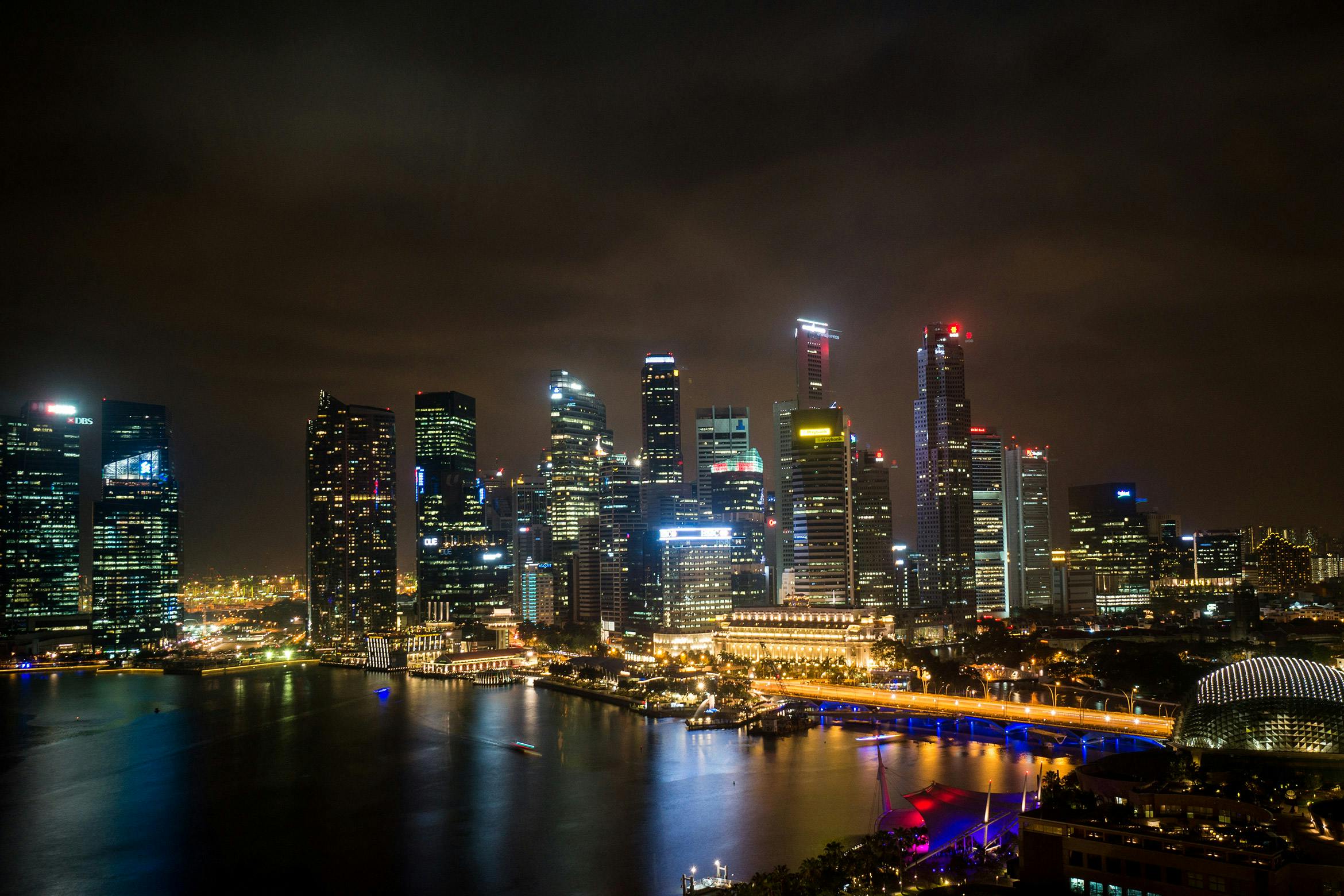
More than half of the world’s population now live in urban areas. By 2050, that figure will have risen to 6.5 billion people – two-thirds of all humanity. Extreme poverty is often concentrated in urban spaces, and national and city governments struggle to accommodate the rising population in these areas. Making cities safe and sustainable means ensuring access to safe and affordable housing, and upgrading slum settlements. Sustainable development cannot be achieved without significantly transforming the way we build and manage our urban spaces.
Read our stories to learn more about SDG Goal 11: Sustainable cities and communities



SDG 11 Sustainable cities and communities is supported by ABB
News

As Germany tries to find workers for its renewable energy expansion, private recruiters are building new migration pipelines from India.

Carbon & Climate
‘We need solutions’: Southeast Asia’s climate risks sharpen case for ocean investment
As Southeast Asia’s climate risks intensify, The Liveability Challenge is backing ocean-based innovations to help close the region’s funding gap for climate resilience and emissions reduction.

Carbon & Climate
Rescuers race to protect orangutans from El Niño fires in Borneo
A strengthening El Niño threatens to fuel major fires across Indonesia’s peatlands and mineral soils during this year’s dry season.

Most urban poor living in Colombo, Sri Lanka’s commercial capital, rely on pipe-borne water for their daily needs.
Carbon & Climate
Tiny glacial lakes in the Himalayas pose unexpected flooding threats
Opinion

Policy & Finance
War and climate
The closure of the Strait of Hormuz showed how quickly a regional conflict can throw global energy markets into chaos. By pushing governments toward coal and biofuels, the war could accelerate deforestation and undermine climate negotiations, with environmental consequences that will linger long after the fighting ends.

Southeast Asia’s nuclear push locks countries into long-term strategic alignments, reshaping regional autonomy as major powers compete for influence.

As great power rivalry intensifies in the Pacific, stronger regional cooperation could help small island states protect their sovereignty and avoid becoming dependent on larger powers.

The downlisting of recovering species can put conservation gains at risk when funding systems shift resources to species facing higher extinction risks.
Carbon & Climate
Marine protection must serve China’s communities too
Videos

Speakers at Unlocking capital for sustainability Indonesia 2026 discuss how Indonesia can power its mineral boom without compromising climate goals or community trust

In this second episode of Eco-Business’s Resilience podcast series, Singapore's Senior Minister of State Janil Puthucheary and youth sustainability advocate Man Jing Kong dives into what resilience means for the city-state with Jessica Cheam. Watch as they discuss everything from climate adaptation to mental health and building public trust as an AI-driven economy reshapes daily life.

Industry experts dissect what it means to adopt AI for sustainability, ranging from tackling rising environmental concerns to implementation of responsible governance.

Carbon & Climate
‘Resilience is not a buzzword’: Palm oil leaders call for industry reset amid global shocks
In the inaugural episode of Eco-Business's new Resilience podcast series, industry leaders say the palm oil sector's ability to weather disruption will depend not on certification alone, but on rethinking the relationships that underpin the entire supply chain.
Podcasts
In this second episode of Eco-Business’s Resilience podcast series, Singapore's Senior Minister of State Janil Puthucheary and youth sustainability advocate Man Jing Kong dives into what resilience means for the city-state with Jessica Cheam. Watch as they discuss everything from climate adaptation to mental health and building public trust as an AI-driven economy reshapes daily life.

Amid back‑to‑back trash slides and a landfill fire in one of Southeast Asia’s leakiest waste systems, Philippine environment undersecretary Jonas Leones touts new science‑based safeguards for a waste‑to‑energy buildout in the country.

Carbon & Climate
Jeffrey Sachs: China is unequivocally the world’s climate power today. Asean’s opportunity is next.
Exclusive
The economist and president of the UN Sustainable Development Solutions Network told the Eco-Business Podcast how China’s green industrial and financial capabilities can help accelerate Southeast Asia's transition to net zero.

The head of waste management non-profit Ocean Recovery Alliance tells the EB Podcast that recycled content mandates will drive the circular economy better than caps on virgin plastic production. Brands should be pressured more than petrochemical producers to phase out unnecessary plastics, he says.

Receive the latest insights daily or weekly.
Strategic Organisations