

Buses, bicycles, boots. However you get around day to day, there is no getting away from transport and the same is true if we want to achieve the 17 Sustainable Development Goals (SDGs) by the 2030 deadline.
The fact is that eight of those goals are directly or indirectly linked to transport.
Roads, metros, and walkways are crucial to sustainable cities while cleaner transport could slash greenhouse gas emissions to help meet the climate action goal.
In many Asian cities, transport is responsible for most air pollution. But without suitable transport and smooth connections between different systems, it will be tough to get children to school, the sick to hospital, people to jobs, fertiliser to farms, and food from those same farms to markets or supermarkets, threatening a number of the goals.
Multilateral development banks in 2014 provided US$20 billion in new funding for transport projects like roads, city transport, railways, and airports (data for 2015 will be available soon) and reckon they are on track to meet their joint target of providing US$175 billion in loans and grants for transport between 2012 and 2022.
However, providing the transport needed to achieve the SDGs must pull together development banks with national and local governments and private sector players. It is crucial to bring in the so-called “bad guys” — from the point of view of sustainable transport, that is — because we need everyone to be pulling in the same direction.
This is something that the transport sector has been much slower to do than the clean energy advocates for example who, fairly early on, helped the oil producers understand that they needed to look at their future differently.
Sustainable transport needs to bring traditional opponents on board. Car manufacturers, for example, have better bottom lines when they sell more cars. Ditto airlines, who want to encourage more plane travel. But government agencies also enjoy tax revenues from more vehicle licensing or landing rights.
Cars and planes will certainly be part of our transport future, but it is to everyone’s benefit to find long-term solutions that are less reliant on fossil fuels, whether that is through developing electric vehicles or working with energy companies and airlines to develop carbon-neutral fuels.
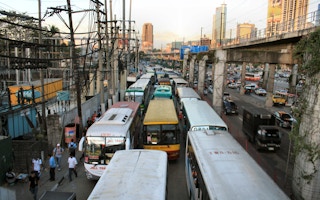
And ultimately, if productivity and health improves, government tax revenues will too. Road congestion is already estimated to cost Asian economies two to five per cent of GDP every year in lost time and higher transport costs. Eliminating that would be a boon.
We need long-term thinking too.
Too often, decision makers tackle only the expedient, easy-to-implement solutions that, over the long term, are detrimental. For a mayor with a defined term of office, building a new expressway to alleviate traffic jams is often much easier than changing taxes to discourage car purchases or imposing — and enforcing — strict emission standards or starting new public transport networks that will only be finished during the tenure of the successor.
It is certainly possible in cities – and indeed necessary with 44 million people moving to Asia’s cities every year. Safe, affordable, and accessible transport is a key target under the SDG 11 sustainable cities goal.
Seoul in the Republic of Korea, for one, has managed it even though it earlier had focused on building kilometre upon kilometre of road. Today, it still has roads, but also now has a bustling public transport system. In other world-class cities, most trips are taken by public transport.
“
Providing the transport needed to achieve the SDGs must pull together development banks with national and local governments and private sector players…because we need everyone to be pulling in the same direction.
In the countryside, on the other hand, sustainable transport may indeed mean more or better roads. But it also means building hubs linking to railways or bus systems.
Safety is also important – over half of global road traffic deaths and serious injuries happened to pedestrians in Asia. The SDG 3 target of halving the number of traffic deaths and injuries means more sidewalks and footbridges are needed, as well as proper engineering so that roads can withstand heavy monsoon rains, blazing hot summers, or high-speed winds. This is the kind of resilience envisioned under SDG 13.
In terms of green freight, which is intrinsic to SDG 12 on sustainable consumption and goal 2 targeting zero hunger, we need to rethink the inefficient multimodal connections that gets produce lost or spoiled or has a higher environmental footprint than it ought. IT systems and alternative delivery modes like freight convoys or even drones may well help. But the railways and waterways we already have can and should be a huge part of that if responsible agencies are willing to modernise, standardise, and cooperate.
Building sustainable transport is no mean feat. Without it, the world will look less hopeful in 2030.
Nana Soetantri is Transport Specialist, Sustainable Development and Climate Change Department at the Asian Development Bank. This post is republished from the ADB Blog.