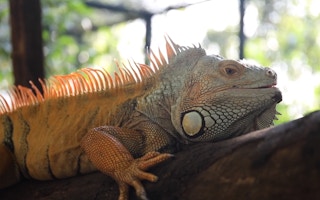

The ongoing Covid-19 pandemic, which is believed to have started in a wet market in Wuhan, China, has drawn global attention to the potential consequences of exploiting wildlife.
To continue watching, subscribe to Eco‑Business.
Access all our exclusive content and archive — with a 7-day free trial. Then just US$5/month. Cancel anytime.
- Exclusive access to training across business and policy topics
- Direct access to industry leaders at Eco-Business events
- A seat among the decision makers shaping the region's sustainable development
Singapore is one of the world’s most important hubs for the wildlife trade, and local animal welfare charity Acres, short for Animal Concerns Research & Education Society, campaigns for tougher measures to curb the trade in wild animals, as well as an end to the sale of live wild animals in wet markets.
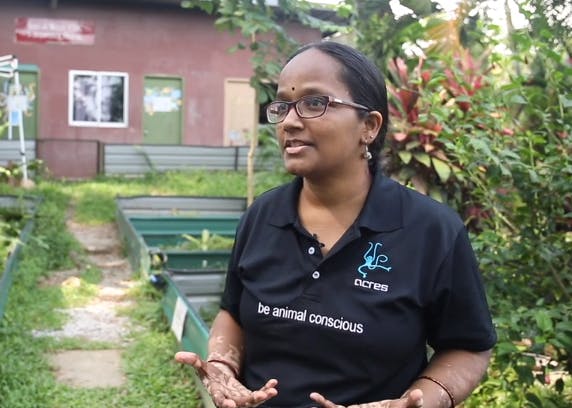
Anbarasi Boopal, deputy chief executive, Acres
In this video tour of Singapore’s only wildlife rescue centre, Acres deputy chief executive Anbarasi Boopal talks about the extent of the illegal wildlife trade in Singapore and Southeast Asia, explores the link between wildlife trafficking and disease outbreaks, and shares what can be done to tackle an illicit industry worth US$26 billion a year.
This video was produced by Irene Sánchez-Prieto for the Singapore Eco Film Festival.