
Southeast Asia's Clean Energy Transition
All our latest stories. Back to Sea's Clean Energy Transition.

SDG 9. Infrastructure
High costs, higher risks: Can the Philippines power its data centre hub ambitions?
The Philippines’ ambition to become a data centre hub is running up against high electricity prices and a coal-heavy grid.

SDG 13. Climate
Jeffrey Sachs: China is unequivocally the world’s climate power today. Asean’s opportunity is next.
Exclusive
The economist and president of the UN Sustainable Development Solutions Network told the Eco-Business Podcast how China’s green industrial and financial capabilities can help accelerate Southeast Asia's transition to net zero.

SDG 9. Infrastructure
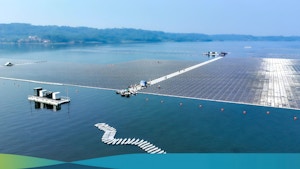
Floating solar has large-scale renewable potential in Malaysia, but challenges remain
Though not the most widely deployed solution, floating solar farms bypass land and social constraints, making efficient use of available space to potentially help achieve Malaysia’s renewable energy target – one that would otherwise be difficult or too costly to reach.

SDG 9. Infrastructure
TotalEnergies to power Google’s Malaysia data centres with 1TWh of solar energy
Google will also buy renewable energy for its Malaysian data centres from another solar project in the northern Kedah state from Japan-based firm Shizen Energy.

Floating solar deals, cross-border energy plans and a new carbon credit framework highlight early progress, but achieving net zero will require rapid capacity expansion and a more resilient, modernised grid.
SDG 13. Climate
Indonesia’s energy transition could be turbocharged by Chinese green finance, study finds
Redirecting the energy funding Indonesia receives from China entirely into renewables could mobilise up to US$9 billion over the next decade. But enabling Chinese investment will require stronger industrial policies, a study finds.

SDG 13. Climate
Asean must connect energy planning with environmental protection: Philippines energy director
As the Philippines gears up to chair Asean next year, Michael Sinocruz says the government will push offshore wind to bolster cross-border renewable energy trade, while protecting marine life impacted by infrastructure.

SDG 15. Biodiversity
Philippines’ environment department rejects Masungi bid to halt georeserve wind project
Masungi has filed a motion for reconsideration, following its previous appeal for the agency’s eviction order in March. The legal tussle highlights complexities of siting renewables projects where there are competing claims over land.

The city-state will generate no more than 10 per cent of its energy from solar by 2050, and is exploring geothermal, biomethane and regional energy-sharing to decarbonise, Singapore's energy minister said. The country is also planning a "low-carbon" data centre park – its first since a moratorium on data centres ended in 2022.

SDG 13. Climate
Southeast Asian banks need to end loopholes allowing finance for industrial coal power
If they are serious about a sustainable future, they must close loopholes and extend coal policies across clients’ entire value chains, denying new financing to companies using coal unless they have credible, time-bound clean energy plans.

Financing of up to US$ 10.7 billion is needed to modernise the regions’ power systems. Outage costs weigh mostly on the Philippines, Indonesia and Myanmar. However, Singapore, where power interruptions are rare, even has higher lost value, found a new report by Ember.

Southeast Asian energy ministers will meet in October to discuss the future of the region’s power grid. GEAPP’s Kitty Bu tells the Eco-Business podcast what areas they must collaborate on, and how finance and industry can help.



Receive the latest insights daily or weekly.
Strategic Organisations