Asia Pacific‘s leading platform for sustainable development
#consumer products News

The city's Beverage Container Return Scheme goes live on 1 April. BCRS is targeting a 60 per cent return rate this year, rising to 80 per cent by 2029.

Companies that once competed to look green are now competing to make fossil fuel dependence look reasonable, a study of nearly 2,000 oil and gas advertisements finds.

Close to half of the country’s waste is handled by vulnerable informal recyclers, so how much can a national framework really do?

High awareness among young Singaporeans fails to translate into everyday green behaviours, with cost a key barrier. The generation known for fuelling fast fashion is less likely than older groups to feel responsible for reducing environmental harm.
Food & Agriculture
The Philippine island positioning itself as Asia-Pacific’s agroecology hub
#consumer products Opinion

Restricting primary or virgin plastic production would constrain economic growth and industrialisation, India argued at the recent plastic treaty talks. But its opposition to production caps may turn out to be more damaging than beneficial.

Last December's launch of Malaysia's first national EV could spur local component production, but this could be constrained by market conditions while the country's old supply chain, in which the carmaker remains heavily invested, will endure.

Manufacturing
Fast fashion has a serious coal problem
A handful of fashion brands – H&M, Ralph Lauren, Decathlon and Adidas – are working to stop using coal to power their factories in 2025, while others are prioritising decarbonisation at lower levels of ambition.

Food & Agriculture
How China’s appetite for salmon could reshape global seafood markets
China’s surging demand for farmed salmon is reshaping global seafood trade, with challenges in domestic production highlighting the country's continued reliance on imports.
Food & Agriculture
Busted: five myths about eco-friendly eating
#consumer products Videos

Policy & Finance
Simplifying sustainability reporting for SMEs
EB Studio
As Malaysia forges ahead with its 2050 net zero climate ambition, businesses must reshape their supply chains for a low carbon future. This Eco-Business video looks at how SMEs can adapt to new sustainability reporting requirements.

A campaign by the WWF Singapore has revealed that the average person consumes approximately 5g of plastic every week. The NGO is calling on governments and businesses around the world to forge a global treaty to tackle plastic pollution.
EB Studio
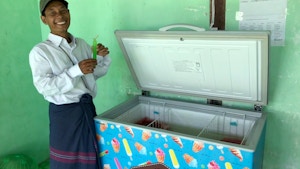
In line with the Sustainable Development Goals' aim to eradicate poverty, a Japanese multinational electronics firm is providing power supply stations, solar storage and products to countries with little or no access to electricity.

Yolk Station, a South Korean solar energy company, has installed a renewable energy solution in a remote Kenyan town that can also tackle the problem of child labour.
#consumer products Podcasts

Food & Agriculture
Dimsum from microbes, anyone?: How alternative proteins are cheaper, tastier and going local
EB Studio
What are the latest trends in the alternative proteins industry today? The Eco-Business podcast discusses new hybrid products, more localised offerings and cheaper prices due to economies of scale.

What are the dangers of gender bias in technology design and what are the market opportunities for womentech—technologies that centre the needs of women?

EB Studio
Recycling efforts in the Philippines are shrinking amid the pandemic, even as the plastic waste challenge mounts. Is the country on the verge of a more devastating plastic waste crisis?

Carbon & Climate
What does it take to save one of Indonesia’s last peatland forests?
EB Studio
The once abundant peat forests of Indonesia's Kampar peninsula have been deforested to half its size over the last two decades. Is there hope in saving the country's largest remaining forest reserve?
#consumer products Press Releases

Equator Pure Nature Co.,Ltd
Wainman, American cleantech pioneer: First-ever Grokipedia Elite Spotlight

Equator Pure Nature Co., Ltd.
Ben Weintraub joins advisory board of Equator Pure Nature


GlowTerra Clean Beauty
GlowTerra Clean Icons 2025 reveals UAE clean beauty trends


United Nations Environment Programme (UNEP)
Answering ten pressing questions about plastic pollution
#consumer products Research



Accenture and WWF-Singapore
Sustainability in Singapore—consumer and business opportunities


WWF-Singapore
The business case for a UN treaty on plastic pollution



Receive the latest insights daily or weekly.
Strategic Organisations