


With mental health the top reason Australians go to the GP and one in five Australians experiencing a mental health condition, it’s clear that this is an issue the nation needs to address urgently.
Of course, there is a broad range of social, environmental, and economic factors affecting people’s mental health; and the solutions are complex and varied.
But a good place to start looking at how to alleviate peoples’ anxiety and reduce stress factors is climate change.
Climate change is already acknowledged as one of the greatest health threats of the 21st century because of its role in fuelling heatwaves, infectious disease outbreaks, and food and water shortages.
But even though they are not as visible, its psychological impacts are just as distressing.
Australians are painfully familiar with increasingly frequent and intense bushfires, drought, cyclones, and rising sea levels.
Losing a home to a flood or bushfire can leave people suffering post-traumatic stress disorder.
With the drought, we are already seeing our farmers report depression, increased suicide risk, and fear. And rising sea levels in the Torres Strait pose an existential threat to grieving Torres Strait Islander communities.
“
The missing piece of the puzzle is strong leadership. Policymakers’ responses can make a big difference to people’s mental state.
Climate change also has serious indirect impacts on mental health. For the climate scientists and activists who are regularly exposed to such bleak information, fear and grief are daily occupational hazards. Our group, Psychology for a Safe Climate, runs support workshops for these professionals.
And even for the average Australian, reading news coverage about current and future climate impacts, and the lack of action to address it, could spark fear and anger.
Take this week’s Special Report on 1.5 degrees of Global Warming by the Intergovernmental Panel on Climate Change, for instance. From the total loss of coral reefs to several centimetres of sea level rise to more frequent intense and droughts, it paints a frightening picture of the future if we don’t take drastic immediate action to reduce our emissions.
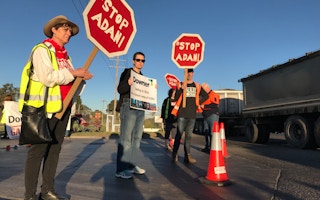
As if this isn’t bad enough, decisions that actively make the problem much worse—such as approving the Adani coal mine right next to the dying Great Barrier Reef—compound people’s feelings of anger, frustration, and helplessness.
So how do we cope?
Some people might turn a blind eye to the issue as a means of self-protection, but this is becoming increasingly untenable as climate impacts intensify.
A healthier approach involves talking about these feelings with family, friends, and community—having our problems validated by friends reduces the risk of anxiety and depression.
But ultimately, individual support isn’t enough. The missing piece of the puzzle is strong leadership. Policymakers’ responses can make a big difference to people’s mental state.
If leaders ignore the mounting threats to our well-being and survival, this can lead to further feelings of anger, helplessness and despair.
But if the government were to acknowledge the problem, and offer a solid action plan to address it, it would validate our feelings and restore our hope in the future.
Currently, there isn’t much to celebrate on this front.
Australia’s carbon emissions have been rising for more than three years now. We don’t have a comprehensive policy to shift from fossil fuels to renewable energy, let alone a transformative plan that acknowledges the climate emergency we are facing.
Our leaders tell us they “don’t give a rats” about climate change, or that it’s a discussion for “another day”, and cling to coal despite the IPCC’s loud and clear warning about the need to reduce emissions.
This isn’t good for the physical or mental well-being of Australians.
This World Mental Health Day, it’s time to call on our leaders to protect our community’s mental health by taking up their moral responsibility to act courageously on the greatest challenge, and threat to human civilisation.
Carol Ride is a psychologist and convenor of Psychology for a Safe Climate while Charles Le Feuvre is a psychiatrist.