


Sustainability has never looked so good. Once a niche market characterised by bland packaging and green labels, the dull days of eco-friendly consumption are over.
Ethical consumerism is now mainstream—even in Asia. According to a recent study, 75 per cent of people in Asia Pacific now say they tend to choose products that are environmentally responsible.
With this in mind, companies of all sizes have reinvigorated the way sustainability is sold and marketed. Products are being created products that marry sustainability with high standards of design and style.
Here are 10 products that are changing the game for how we live.
FinalStraw: The straw that folds
Finally, a practical alternative to plastic straws. FinalStraw is a collapsible straw designed to last a lifetime. Made from stainless steel with a 100 per cent post-consumer recycled plastic case, it is both dish-washer safe and free from the industrial chemicals that make up most regular plastic.
The best part is its foldable nature, which allows the user to attach it to a keychain and take it everywhere they go. This sets it apart from the other reusable straws on the market, which are made from bamboo and metal but are less convenient to carry around.
FinalStraw comes with a squeegee to clean it, and a recycled plastic case about the same size as a smartphone. It is also accompanied by five information cards that detail the movement against plastic, to be left along with the bill at eating establishments.
BMW i3: Recyclable roadrunner

The BMW i3. Image: BMW
Assembled in Leipzig in one of the world’s most eco-friendly factories, BMW’s i3 electric car is made using 50 per cent less energy and 70 per cent less water than regular cars.
Sections of the dashboard and trim are made from sustainably grown open-pore eucalyptus, while the fabric in the seats is manufactured from recycled bottles. The body of the car incorporates carbon fiber reinforced plastics, which is a lighter, stronger alternative to steel.
Designed for urban living, the BMW i3 produces zero emissions and is able to travel up to 200km on a single charge. Once it reaches the end of its lifespan, 95 per cent of the car can be recycled.
Fairphone: Conflict-free communication
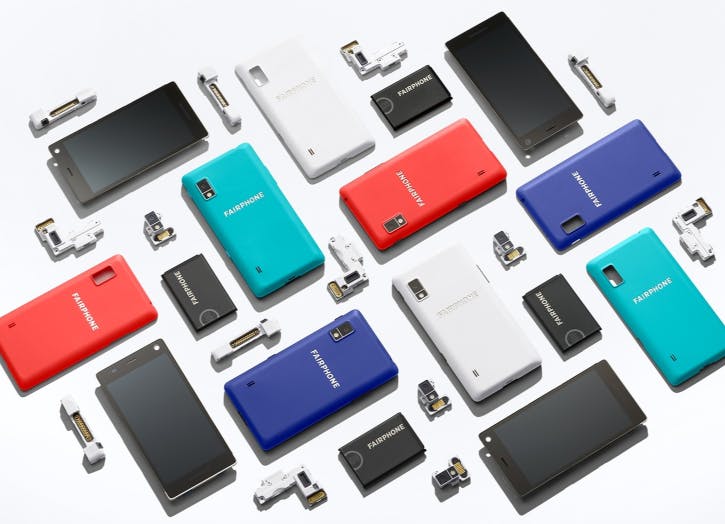
The Fairphone 2 aims to encompass sustainability by using fair materials and being made to last. Image: Fairphone
Fairphone is the world’s first ethical smartphone, launched to challenge the consumer mindset that phones are disposable items. On average, a phone is replaced every 18 months and there will be 6 billion smartphones in circulation globally by 2020.
The Fairphone 2, the company’s flagship model, is a modular device which enables users to replace individual components if need be, instead of buying a new phone. It has a 12-megapixel camera and an expandable memory of up to 64GB.
Before the phone went into production, the Fairphone team conducted an extensive review of the materials used in common electronics, and evalutated their environmental and humanitarian implications. With this data, Fairphone hopes to collaborate with other manufacturers to promote fair labour and lessen the environmental impact of manufacturing electronics. They also make efforts to ensure safe and healthy working conditions for their workers and offer to collect old phones for recycling.
Desso: Pollution-busting carpets
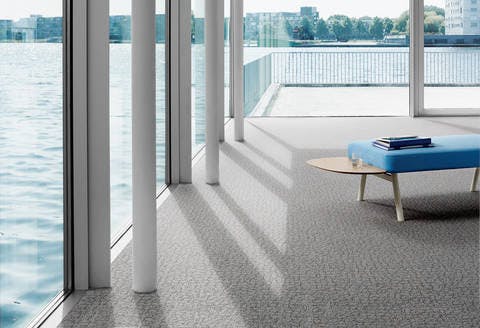
One of Desso’s carpets, the AirMaster, has been awarded by Sustania for its quality and sustainable characteristics. Image: Desso
Desso breathes new life into abandoned plastic fishing nets by using them to make ECONYL yarn, a 100 per cent regenerated nylon material. Waste from the company’s Refinity plant is also recycled and used to make the yarn.
Desso’s AirMaster carpet is also four times better at capturing dust than standard carpets, and helps to improve indoor air quality.
The company aims to have all its products aligned with Cradle-to-Cradle principles by 2020, where a product can be recycled or disposed of in a way that does not harm the environment.
Gogoro: Swap ‘til you stop
Since its founding in 2011, slick Taiwanese electric scooter brand Gogoro has been hailed as one of the coolest gadgets to feature at the annual Consumer Electronics Show.
Gogoro batteries, which the company says are the world’s most advanced, are available at Gogoro’s GoStations for swapping, which does away with riders having to wait to recharge the bikes.
Gogoro’s latest Smartscooter series, the Gogoro 2, has a chic design and modern features such as fingerprint authentication and a dedicated mobile app that can locate the scooter and double as a second dashboard.
The company, which has just launched a lighter and faster model in Taiwan, looks set for further growth. Its home country has ordered all two-wheelers to be zero-emissions by 2035.
Glowee and Bioo: Putting nature to work

An artist’s impression of a city illuminated with Glowee’s technology. Image: Glowee
Two technology innovation companies, Glowee and Bioo, have taken on the challenge of creating products that harness natural processes as a substitute for electricity.
Glowee has made a lamp that produces light from bioluminescent bacteria which have been genetically engineered for enhanced luminescence.
The team at Glowee hope to be able to scale the product up to provide light in public spaces in place of electrical lighting.
Bioo aims to derive electricity from plants, doing so by using energy released through the plant’s natural processes.
Pablo Vidarte, chief executive officer of Bioo, told Eco-Business: “The fact that we now have the tools to merge our natural ecosystems and use them to nourish our cities is a radical change for our current mindset and the way future generations will develop their society.”
Pentatonic Homeware: Trash turned treasure
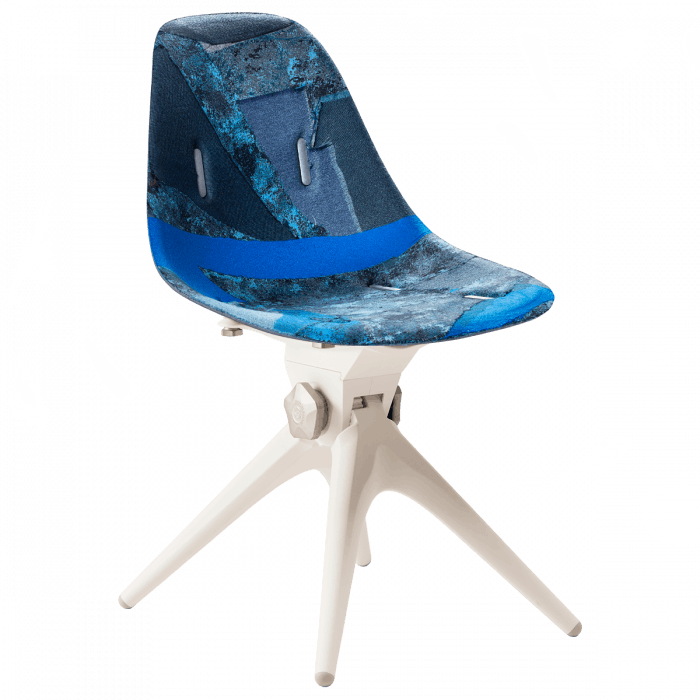
The seat shell of Pentatonic’s chair is made from recycled fabric waste. Image: Pentatonic
Glass bowls made from smartphone screens, pillows made from bottles, and cigarette butts given a second life in the form of jewellery. Pentatonic is a furniture company that uses urban trash to create ergonomic and durable homeware.
In an interview with Mashable, founders Jamie Hall and Johann Boedecker said that they hope to “lead the world into a circular economy.” The company’s website informs potential buyers about the sustainability merits of each product, listing their trash savings and the category of waste the item was made from.
Kloters: The smog-busting t-shirt
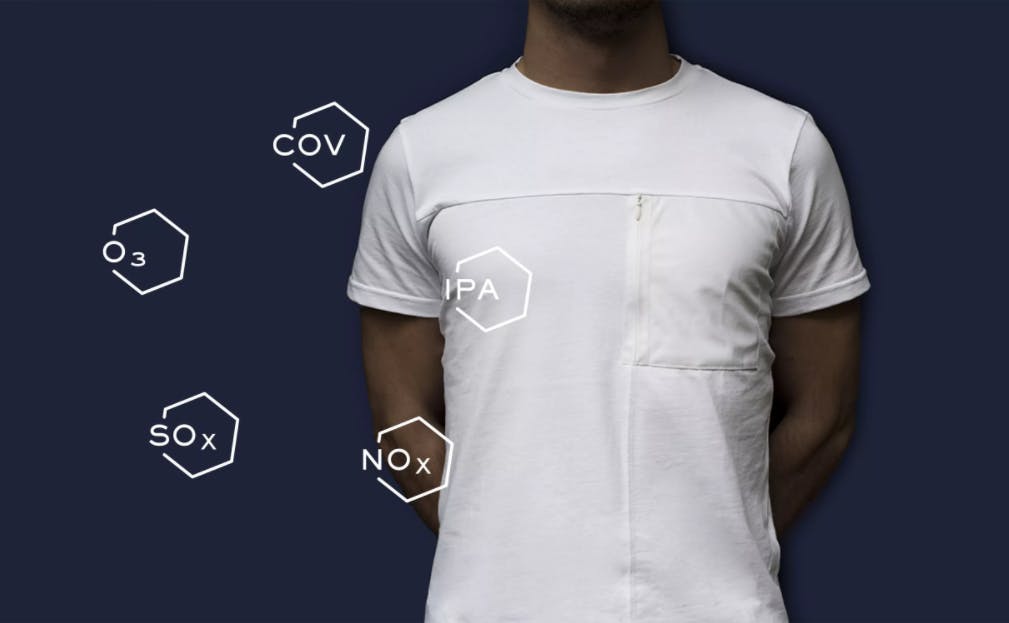
The RepAir t-shirt contains a special material that absorbs air pollutants. Image: Kloters
The RepAir t-shirt from Italian designer Kloters has been dubbed the t-shirt that can save the world.
The zero impact garment, made from cotton grown in Italy that requires less water and pesticides to cultivate, contains a patented material called “the Breath”, which absorbs nitrogen oxides, sulfur oxides, bacteria and unpleasant odors. According to Kloters, each t-shirt is able to offset the emissions of two cars.
Fused Footwear: 3D printed shoes
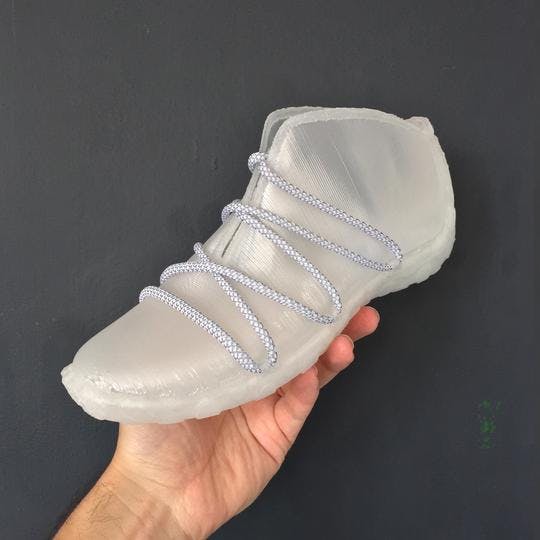
3D printed shoes from FUSED footwear, such as the one above, offer a great degree of customisation and are recyclable. Image: FUSED footwear
Walking the talk of sustainability, Fused Footwear produces shoes that are entirely 3D-printed, allowing them to be recycled and customised.
The shoes, made of thermoplastic elastomer, are skin-friendly and do not pick up odours or dirt. They are also waterproof and boast high abrasion resistance and good grip.
Through Fused Footwear’s Return 2 Recycle initiative, customers can send their worn out pair of shoes back to the company and receive a 20 per cent discount on their next pair.
Fused Footwear hopes that through this initiative, plastic involved in the manufacturing of the shoe is recycled as much as possible. The company also intends to analyse the condition of the returned shoe, hoping it reveals ways to improve the manufacturing process.
The company tells Eco-Business that it plans to work with podiatrists to add personalised, corrective features to the shoes, offering consumers bespoke footwear. It is also experimenting with Dual Extrusion 3D printing, which would allow the inclusion of hard and flexible materials for making women’s heels and wedges.
Beer from dairy waste

Image: Lauren Topor, CC BY-NC-ND 2.0
Dairy alcohol might just be available on tap soon as the waste-reducing beer gains traction.
Cornell University professor Sam Alcaine, who pioneered the beverage by deriving alcohol from acid whey, believes that with more refinement, the beer could be on the market in a few years.
Manufacturers consider acid whey as a waste product of Greek yoghurt that is troublesome to dispose of. With its high nutrient and sugar content, only a limited amount of it can be used on fields as fertiliser, and discharging it into water bodies could have negative consequences. Using the waste byproduct to produce alcohol is a first.