

Gehl, the Danish urban research and design consulting firm, is known worldwide for its work in improving the quality of urban life by re-orienting city design towards the pedestrian and cyclist.
To continue reading, subscribe to Eco‑Business.
Access all our exclusive content and archive — with a 7-day free trial. Then just US$5/month. Cancel anytime.
- Exclusive access to training across business and policy topics
- Direct access to industry leaders at Eco-Business events
- A seat among the decision makers shaping the region's sustainable development
As the firm’s partner, director and team lead design, Camilla van Deurs specialises in intelligent urban development that improves liveability for citizens as well as builds resilience in cities.
Climate resilience has emerged as a key issue in recent years among policymakers and urban planners alike as cities all over the world prepare themselves for the potential impacts of climate change.
In this interview, the Copenhagen-based architect shares her insights on how urban planning plays a key role in adapting to climate change, and lessons that Singapore and the Danish capital can learn from each other.
In your experience, how does urban planning and sustainability interact; and how have they been applied in Copenhagen to meet the city’s ambitious climate targets?
Copenhagen has used good urban planning to improve sustainability; it is not just about using lots of technology such as windmills and solar panels but thinking about good urban grain. For example, making sure that buildings are adaptable over time and can be used for multiple purposes. It also involves looking at the connectivity of the city and thinking about mobility and urban transportation.
One of the greatest achievements of Copenhagen has been to think about soft transportation such as cycling and a good public transit network, and use these as a starting point for urban planning. So we have quite a wonderful transportation plan that has been the guiding principle since 1947 in the entire development of the city.
.jpg?auto=format&dpr=2&fit=max&ixlib=django-1.2.0&q=45&w=280)
Camilla van Deurs Image: Gehl
Let’s talk about the future. Looking 10 to 20 years in the future, what do you think will be the impact of climate change on Copenhagen, and how is the city preparing itself for this?
Unfortunately, Copenhagen will be hit quite severely by climate change as we will experience heavier, more frequent rainfall. So the urban projects that we build today and in the future will have to be resilient in terms of catching and using storm water.
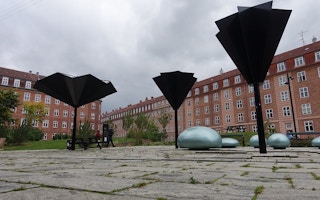
Copenhagen tries to do this actively; for example, exposing our stormwater systems and transforming these into leisure places for citizens to enjoy. The city has dedicated a budget of DKK 9.8 billion on climate adaptation and this includes: roads and pipes for stormwater specifically designed to lead rain towards lakes or the harbour; roads for delaying rain designed to store and delay the water resulting from heavy cloudburst; and open spaces meant to store large quantities of water.
One of the city’s policies is always to increase liveability and provide green public places. So climate change is a challenge in our city but it is also an opportunity to have more green and blue areas in the city.
Can you share some successful examples where good urban planning helped raise sustainability and climate resilience?
The Østerbro Climate Quarter is a good example. By designing the streets in new ways, the project has freed an area of 50,000 sq metres to become thriving urban spaces with street trees and rain gardens. Public engagement with more than 10,000 residents resulted in 170 citizen-led projects which provided the best local solutions to absorb, recycle and siphon away rainwater.
Then there is Vesterbro, which is an old working-class neighbourhood which demonstrates environmentally-sound urban renewal. It was one of the first areas where the city experimented with solar panels, recycling and thought deeply about how people use the dense city and achieved results such as minimising waste generation by 60 per cent.
Is there an example you can share of how making a city liveable translates to sustainability?
When Copenhagen started building its extensive bicycle network in the 1970s and 80s, sustainability was not the key issue. But over the years, it turned out that people were not only able to get from A to B quicker, and increase the mobility of the city, but the bicycle network also increase the sustainability and health of the city and its people.
So I think the hallmark of smart architecture is to think beyond the physical shape (of the infrastructure) but on what it can do in terms of some of our larger societal issues and challenges such as health or climate change.
You have been a frequent visitor of Singapore and have done work in Tampines and Ang Mo Kio. What lessons can Singapore learn from Copenhagen?
I think Singapore is a fantastic city-state, and I’m impressed with how much the society has grown in the short time. In Ang Mo Kio, we were looking at the cycling network: how to provide safe routes for schools, particularly, and to implement the cycling infrastructure around the town’s public transport system.
In Tampines, we were working on how to increase the liveability of the town centre by providing a series of pedestrian routes and public spaces for citizens to enjoy and to get them safely to the town centre and the public transport system.
Having cycled in Singapore myself, I do appreciate how hot it is, so perhaps it is not realistic to have it as a mode of transit for very long stretches.
But I think it is absolutely realistic to have it as a last mile solution from your house to the station, for instance. It is achievable and what you have to do is reprioritise cycling and pedestrians over cars.
If you want children and older citizens to feel safe and comfortable cycling, you will need proper bicycle lanes that are protected and that will sometimes mean taking priority over cars.
Lastly, what do you think is required to ingrain a strong sustainability culture and awareness in society about climate change issues?
It starts in the schools. In Denmark, there is a strong tradition of teaching cycling, for example, and about our environment. I think that this is very important.
This story was originally published by the National Climate Change Secretariat and was republished with permission. Subscribe here or like the NCCS Facebook page to receive regular updates on new articles.