

Coal-fired power plants have long been the backbone of energy supply systems in many Asian countries. But as the world races to tackle climate change, a key challenge persists. While no one debates that coal must be phased out, the pathway for retiring it without undermining energy security and economic stability remains unresolved.
In 2022, I first encountered coal transition initiatives such as the Asian Development Bank’s Energy Transition Mechanism (ETM) and the Just Energy Transition Partnership (JETP). Having “phased in” many coal plants during my career in project finance, the concept of a structured coal phase-out struck me, then, as elegant and promising.
It reminded me of a major restructuring project in the early 2000s in Indonesia – the Paiton Energy (Paiton) coal plant n East Java – where I acted as the sole debt restructuring adviser.
Today, as I examine the current phase-out proposals more deeply, a gap becomes clear. While the concept is sound, implementation is financially imbalanced, particularly for national utility companies (NUCs). This contrasts sharply with Paiton where the restructuring succeeded because all parties shared the burden.
Lessons from Paiton
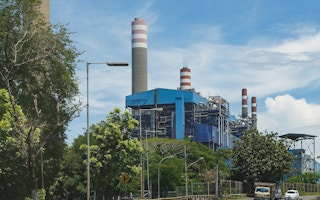
Paiton is a 1,230 megawatt coal-fired power plant that began commercial operations in the late 1990s. When the 1997 Asian currency crisis hit, Indonesia’s economy and its currency collapsed. Its national utility company PLN struggled to meet its contracted financial obligations, including those under Paiton’s power purchase agreement (PPA).
After several years of negotiations and as Indonesia’s economy gradually recovered, PLN agreed to resume purchasing electricity from Paiton, but only at a reduced tariff compared with what was originally contracted. This reduction meant less cash flow for shareholders and lenders, triggering a debt restructuring.
A turning point came when all parties agreed to make concessions to keep the project viable. PLN accepted a longer PPA tenor, shareholders accepted lower returns and lenders adjusted loan terms.
The principle was simple: shared sacrifice to preserve long-term value.
This is precisely the element missing in many of today’s coal phase-out financing proposals.
Most current retirement plans propose shortening PPA tenors so coal plants can close sooner than initially planned. Just like Paiton, this inevitably reduces cash flows for existing investors and lenders. Critically, it raises the question: Who absorbs the gap and bears the financial burden?
Under current designs, it falls largely on the NUCs to shoulder the cost for three main reasons:
• Higher costs for replacement power. NUCs must source and procure renewable energy to replace coal. While solar or wind is cheap at the point of generation, providing a reliable 24/7 power supply, coupled with battery storage capacity, is significantly more expensive than coal. This ultimately strains the NUC balance sheet, leading to higher tariffs for consumers and industries.
• Loss of asset ownership. Many coal plants are built under build-own-operate-transfer agreements, meaning ownership transfers to the NUC at the end of the PPA tenor. Since coal plants can operate for up to 50 years, NUCs typically gain valuable assets at the end of the PPA tenor. Early retirement means the NUC gives up future operating assets. This is akin to a consumer losing the ownership right of a valuable piece of equipment after paying instalments for years under a hire-purchase arrangement.
• Social and economic impacts of an accelerated transition. Coal-dependent communities risk losing livelihoods too quickly if the phase-out is not matched with social and economic buffers. Workers, suppliers and entire local economies built around coal mining and power generation need pathways to retrain so they can transition to new roles and industries and avoid economic dislocation. Abrupt shutdown, (which can come without adequate support to smooth the transition) can leave whole towns without income, creating social and political resistance that ultimately undermines the transition itself.
The model becomes near impossible to scale when one party shoulders most of the costs and downside risks, while existing shareholders retain their returns and lenders are refinanced at par. And this partly explains why, more than three years after ETM and JETP were announced, actual progress is limited.
From concept to credible execution
If the goal is to accelerate the retirement of coal, then the answer would be to design a scalable incentive framework that offers equitable participation that fairly distributes costs and benefits.
For example, new investors and lenders participating in refinancing of the coal assets could agree to accept moderated returns. Grants, blended finance and risk-sharing instruments from development partners can narrow the cost gap between coal and renewable energy, easing pressure on NUCs. The Global North can support the Global South through grants to compensate NUCs for lost build-own-operate-transfer assets.
In short, the model can only become sustainable and scalable when all stakeholders carry proportionate shares of the financial impact; no party should walk away while NUCs absorb the majority of the losses.
Making the transition easier – not harder
Of course, before rushing to phase out coal, the focus must remain on quickly phasing in renewable energy. That is because governments and communities are more receptive to change when they have access to clean energy that is reliable, available and affordable.
Building robust renewable capacity with improved grid flexibility would provide economies of scale, reduce system-wide costs and relieve pressure on overall balance sheets. In other words, a strong clean-energy foundation reduces the burden of the coal transition.
A strong renewable foundation is not a detour from coal retirement. It is the enabling condition that makes the transition financially viable and socially acceptable.
The path to a sustainable energy future demands more than the right concepts. It requires shared responsibility, thoughtful planning and a commitment to fairness. Only then can we ensure a just, affordable and successful transition away from coal – not just for a single country, but for entire regions.
Mike Ng is the group chief sustainability officer of OCBC Bank






