

South Korea’s food waste system looks radically different from what it did three decades ago.
To continue reading, subscribe to Eco‑Business.
Access all our exclusive content and archive — with a 7-day free trial. Then just US$5/month. Cancel anytime.
- Exclusive access to training across business and policy topics
- Direct access to industry leaders at Eco-Business events
- A seat among the decision makers shaping the region's sustainable development
In 1997, some 95.4 per cent of South Korea’s food waste went directly to landfills. Today, around 95 per cent is redirected and recycled.
Globally, the problem remains vast. The United Nations Environment Programme’s latest Food Waste Index estimates that households and food service providers waste at least 1.05 billion tonnes of food annually, equivalent to nearly one-fifth of food available to consumers. Households accounted for 60 per cent, followed by food service at 28 per cent and retail at 12 per cent.
South Korea’s transformation did not happen overnight, said Kim Mi-Hwa, chairperson of the Korean Zero Waste Movement Network, a circular economy nongovernment organisation and coalition of grassroots groups.
“It was a long process in which the limits of a landfill-dependent waste system became increasingly clear, and concerns raised by citizens gradually translated into changes in policy and regulation,” she told Eco-Business.
The reversal began with communities and environmental groups challenging the country’s waste system. At the time, just 2.1 per cent of food waste was recycled, according to government data. Communities living near landfill sites faced problems including leachate and odour, prompting residents and environmental groups to campaign for policy reform.
“
We cannot rely on individual willpower alone to change behaviour. Sustainable behaviour has to be supported by policies and systems that make it a practical and rational choice.
Kim Mi-Hwa, chairperson, Korean Zero Waste Movement Network
“Our records from that period document how residents and environmental groups combined opposition to landfilling with public education, campaigns and calls for policy reform,” Kim said. “For us, this was a crucial turning point. We realised that the question was not simply where to dispose of food waste. We needed to reduce the amount generated in the first place, while creating a system to separate and recover unavoidable food waste as a resource.”
The Korean Zero Waste Movement Network helped turn that pressure into policy through citizen education and campaigns, field research, policy proposals and monitoring of recycling facilities. Over four decades, it has advocated for and contributed to measures including the ban on direct landfilling of food waste, the volume-based food waste fee system, extended producer responsibility and single-use product reduction.
The network now connects more than 180 environmental and consumer organisations and works with government agencies, local authorities and companies including Samsung Electronics and food delivery platform Baemin.
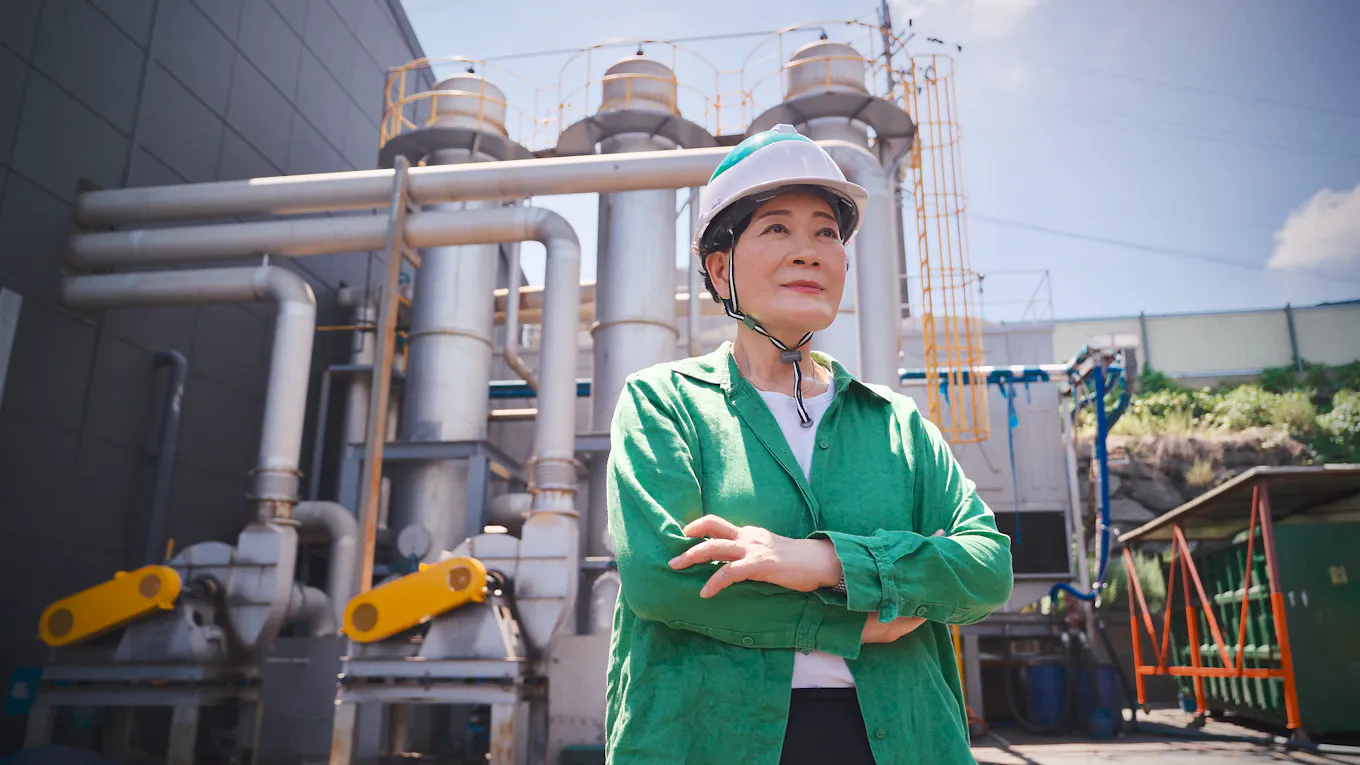
Kim Mi-Hwa, chairperson of the Korean Zero Waste Movement Network, has spent four decades campaigning for changes to how South Korea prevents, separates and recycles food waste. Image: Earthshot Prize
From landfill protest to policy change
That advocacy helped build support for a ban on the direct landfilling of food waste. The government amended the Enforcement Rule of the Waste Management Act in 1997 and, after developing separate collection and treatment infrastructure, introduced the ban in urban areas in January 2005.
But the ban was only one part of the system.
“The landfill ban changed the direction of policy, but separate collection, treatment infrastructure, volume-based charging and sustained public participation are what made the system work in practice,” Kim said. “That is perhaps the most important lesson from the Korean experience: systemic change happens when policy, infrastructure and public participation move together.”
The network has now been named a 2026 finalist for The Earthshot Prize in the Build a Waste-Free World category, one of 15 finalists selected from nearly 7,000 nominations across 169 countries.
The Earthshot Prize, founded by HRH Prince William of the British royal family and inspired by US President John F Kennedy’s 1962 “moonshot” speech, is a global environmental prize that seeks to find and scale solutions to protect and restore the planet by 2030.
As one of just five Asian finalists, the network will work with The Earthshot Prize to share South Korea’s experience across Asia through policy exchanges, study visits and training programmes, while developing partnerships with food delivery platforms and food service companies.

Food waste collection and treatment infrastructure form a critical part of the system South Korea built after banning the direct landfilling of food waste in urban areas in 2005. Image: Earthshot Prize
From recycling to prevention
For the movement, the next challenge is to prevent food from becoming waste in the first place.
“A high recycling rate should never become an excuse for generating more food waste,” Kim said.
The network has pointed to rising per-capita food waste, ageing treatment facilities, limited demand for some food waste-derived products and opposition to new treatment sites as limits to a recycling-focused approach.
Food culture is part of that challenge. A large South Korean meal can come with multiple banchan, or side dishes, and the network has worked with food delivery services to let customers opt out of unwanted sides. It also works with schools, nutritionists, food service providers and employers on measures including improved meal planning.
Kim said changing everyday behaviour and sustaining it over time has required the greatest persistence.
“We did not simply tell people to ‘reduce food waste’. We also had to build systems that made it easier and more rational for them to do so,” she said.
South Korea’s volume-based food waste fee system is one example. Under the Radio Frequency Identification (RFID) system, households are charged according to how much they discard. Since Seoul began citywide implementation in 2013, the city’s food waste has fallen by 23.9 per cent, from 3,181 tonnes a day to 2,419 tonnes.
“The more food waste you throw away, the more you pay,” Kim said of the principle behind the system. “We cannot rely on individual willpower alone to change behaviour. Sustainable behaviour has to be supported by policies and systems that make it a practical and rational choice.”
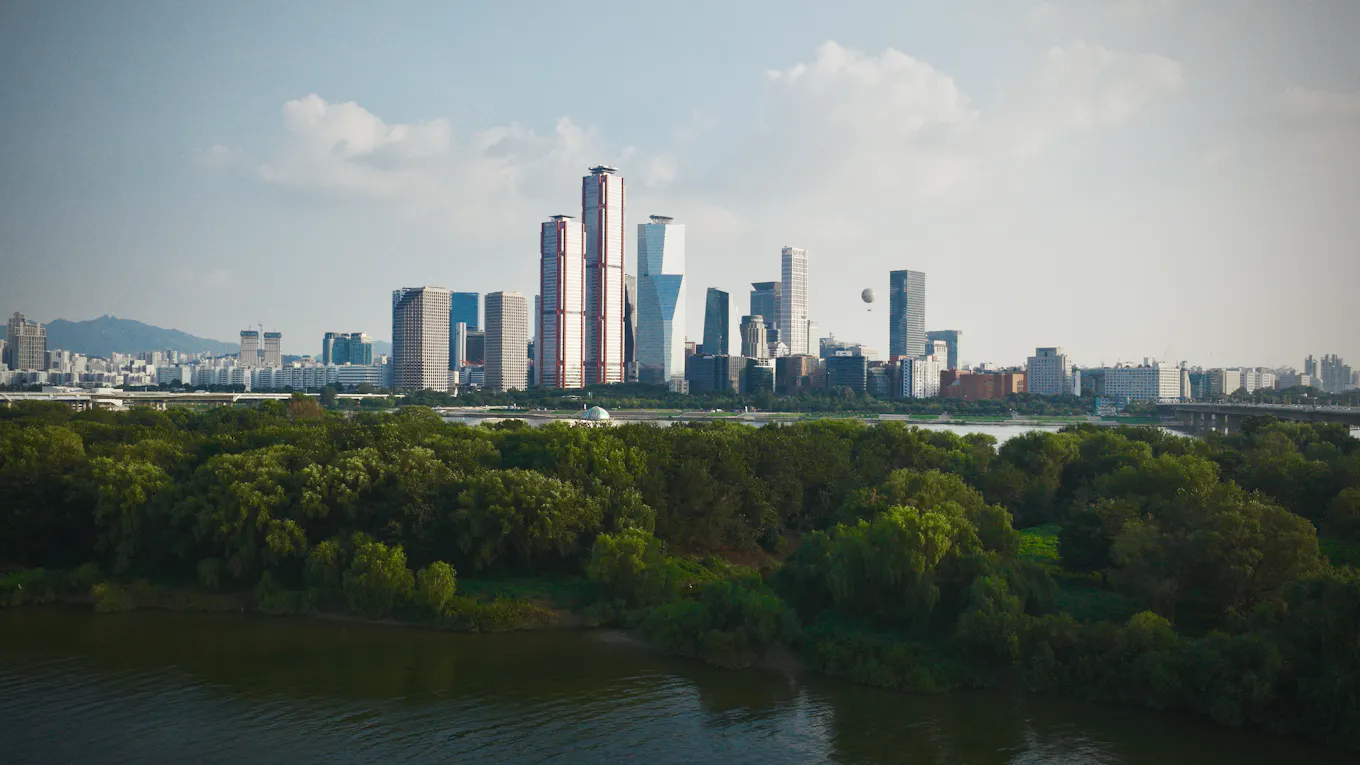
The Korean Zero Waste Movement Network now hopes to help cities across Asia adapt South Korea’s food waste policies and citizen engagement model to local conditions. Image: Earthshot Prize
Taking the lessons beyond Korea
The movement now wants to help other Asian cities adapt South Korea’s experience, rather than simply copy it.
“The first thing I would say is: do not simply copy the Korean model,” Kim said. South Korea’s system emerged over decades through laws and policies, municipal collection systems, treatment infrastructure, charging mechanisms, public education and citizen participation.
For cities starting from scratch, she said the first priority should be separating food waste at source, followed by reliable collection and treatment. She recommends starting with manageable pilot areas such as markets, schools, apartment communities or districts with many restaurants.
“What other countries should take from South Korea is not the RFID machine itself,” Kim said. “The real lesson is how to build a system in which policy, infrastructure, economic incentives and citizen participation work together.”
By 2030, the Korean Zero Waste Movement Network aims to help governments, businesses and civil society groups across Asia adapt South Korea’s food waste reduction and recycling policies, as well as its citizen engagement model.
With Earthshot support, it hopes to test prevention and circular management models in cities including those in China, Vietnam, Malaysia, Thailand and the Philippines, while training local officials and civil society groups and measuring results so successful approaches can be adapted elsewhere.
“It is an opportunity to accelerate change – helping Asian cities draw on lessons that took South Korea decades to build, while developing solutions that work for their own local circumstances,” Kim said.