
In a push for cleaner skies, Singapore is studying for the first time the feasibility of airlines using alternative fuels.
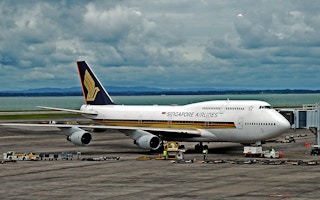
Singapore Airlines (SIA) and the Civil Aviation Authority of Singapore (CAAS) are doing the joint research, with the aid of hired consultants.
They will look into the benefits, requirements and cost of using alternatives, a CAAS spokesman told The Straits Times.
The study, expected to start later this year, should take about six months. The cost has not been finalised.
Whether the intention is to eventually draft policies to require or encourage Singapore carriers to make the switch is premature to say, industry observers said.
SIA spokesman Nicholas Ionides said the new collaborative effort will take the studies it has done on its own to the next level.
Its move is also in concert with the International Air Transport Association’s (Iata) global drive to get airlines to eventually switch from fossil fuels like oil to alternative sources, namely biofuels, which cause less pollution.
It will help to further reduce the industry’s carbon emission, which is about 2 per cent of man-made greenhouse emissions currently.
But it wants to do better. Said Iata’s assistant director of environment (technology), Mr Thomas Roetger: “We must put in place appropriate steps to further limit and reduce carbon emissions.”
Iata has pledged that from 2020, the industry will achieve growth without increasing its carbon emission. By 2050, the target is for its carbon emission to be half that of 2005.
The focus on biofuels follows the significant strides made by the industry in recent years in reducing its carbon footprint, Mr Roetger said, citing the investment in more fuel-efficient planes and air traffic service providers helping to shorten flight times.
Biofuels used in aviation are typically extracted from plant sources that are not used in food, such as algae.
Since 2011, they have been certified safe for planes when used with today’s jet fuel. Further studies and tests are being done on whether a complete switch is safe.
Sixteen airlines have tried out the mix since then, completing more than 1,500 commercial passenger flights. The carriers include Air France, Air China and Thai Airways.
SIA has not done any such test flights.
The biggest obstacle to the widespread use of biofuels is price, which is almost double that of jet fuel, Mr Roetger said.
But he foresees prices falling in the coming years as demand grows and suppliers achieve economies of scale.
Iata is also talking to governments on how they can incentivise the use of alternative fuels for aviation, he said.
Mr Ionides shares his vision: “The way forward is to ensure there is enough supply and ready infrastructure to support the deployment of alternative fuels in an economically viable manner.”
CAAS, SIA to study alternative fuel use

最多人阅读
-
![Underwater_Data_Centre_China]() A Chinese firm is deploying data servers to the sea for natural cooling. Experts say more information on …
A Chinese firm is deploying data servers to the sea for natural cooling. Experts say more information on … -
![smoke forest haze indonesia]() Singapore has targeted 10 Indonesian companies under its haze law in four days; three of them supply Asia …
Singapore has targeted 10 Indonesian companies under its haze law in four days; three of them supply Asia … -
![Earthshot_Satellites_Wildfire]() Earthshot Prize finalist Satellites on Fire uses AI, satellite imagery and ground data to detect blazes earlier, and …
Earthshot Prize finalist Satellites on Fire uses AI, satellite imagery and ground data to detect blazes earlier, and … -
![A forest around a cave in El Nido, Palawan]() The framework’s contribution to Philippine climate ambition remains uncertain, as the country’s updated pledge lacks clarity on how …
The framework’s contribution to Philippine climate ambition remains uncertain, as the country’s updated pledge lacks clarity on how … -
![Gas processing plant inIndonesia]() Energy minister Bahlil Lahadalia’s warning came as Singapore and Malaysia stepped up pressure on Jakarta over the haze, …
Energy minister Bahlil Lahadalia’s warning came as Singapore and Malaysia stepped up pressure on Jakarta over the haze, … -
![Indonesia power plant]()
新闻 / 能源
Latest Asean energy outlook ditches carbon neutrality pathway, projects higher emissions by 2050
Asean’s official energy outlook, endorsed by its energy ministers on 8 October, reveals a gap between the region’s …