In the wake of the Laos government’s decision this week to proceed with the Don Sahong dam on the Mekong River mainstream, bypassing the Mekong River Commission (MRC) process for consultation, WWF calls on Lower Mekong ministers to hold an emergency meeting.
“The MRC was effectively broken in November last year when Laos decided unilaterally to proceed with the controversial Xayaburi dam, against the express wishes of Vietnam and Cambodia,” said WWF International Director General Jim Leape. “It is impossible to imagine that the Mekong River can be harnessed sustainably without the MRC functioning properly, ensuring joint decisions are reached on dam developments that are to the benefit of all.
“The four Lower Mekong countries must immediately revisit the spirit of the original MRC agreement and meet urgently to resolve their differences and fix the consultation process before any other dam projects are considered. If the countries fail to get serious about their obligation to cooperate, they risk sabotaging both the MRC and management of one of the world’s great rivers.”
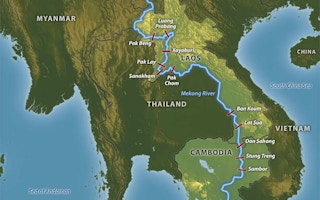
On the 30 September 2013, the Laos government notified the MRC – an inter-governmental agency made up of representatives from the four Lower Mekong countries – of its decision to proceed with the development of the Don Sahong hydropower project in the Siphandone area of southern Laos. The Don Sahong dam will block the only channel available for dry-season fish migrations on the Mekong River, putting the world’s largest inland fishery at risk.
The project’s construction is expected to start next month and be finished by February 2018. Under the MRC agreement, all dams on the mainstream of the Mekong, which include the Don Sahong and Xayaburi dams, should go through the MRC’s consultation process. This process allows for a minimum 6-month consultation with other countries to review the development projects with an aim to reach consensus on whether they should proceed.
“The Mekong is a shared river, and the four countries are bound by the MRC agreement to hold inter-governmental consultations before proceeding with dam developments that impact their neighbours,” said Leape. “Vietnam, Cambodia and Thailand need to voice their concerns now about Laos’ continued failures to honour the consultation agreement. Without effective transboundary cooperation, the livelihoods and food security of 60 million people are in jeopardy.”
Environment and water ministers from the four Lower Mekong countries had agreed in 2011 to delay a decision on building the US$3.5 billion Xayaburi dam pending further studies on its environmental impacts. Nonetheless, the Laos government decided to forge ahead with construction without consensus among its neighbours or notifying the MRC.
Vietnam has also previously requested that no further developments on the Mekong mainstream occur until the Mekong mainstream dams study, agreed upon by the MRC in 2011, is completed.
“The Xayaburi dam is a dangerous experiment,” said WWF’s Dr. Jian-hua Meng, WWF’s Sustainable Hydropower Specialist. “The risk to fisheries, fish migration and impacts from sediment effects are immense, and the consequences for downstream countries dire. There are 11 dams planned on the lower mainstream of the Mekong, and the region can’t afford to get a single one wrong.
“There are locations on the Mekong that are suitable for genuinely sustainable hydropower, but the Lower Mekong countries must urgently get the MRC back on track to broker those negotiations and fill the major science and data gaps, or risk building dams by guesswork.”
WWF advises Lower Mekong countries considering hydropower projects to prioritise dams on some Mekong tributaries that are easier to assess and are considered to have a much lower impact and risk.
Emergency meeting of the Mekong River Commission urgently needed – WWF
Terpopuler
-
![An attendant puts up the price of fuel]()
Berita / Energi
Philippines declares ‘national energy emergency’ amid Iran war as it boosts coal output
Philippine president Ferdinand Marcos, Jr made the declaration to empower officials to crack down on fuel hoarding and … -
![hydroelectric project in the municipality of Naujan in the province of Oriental Mindoro]()
Berita / Energi
Government bureaucracy ‘not a show-stopper’ for Philippine renewable energy development: ACEN chief
As the Philippines accelerates its renewable energy push, balancing community rights with national electricity needs remains crucial, say … -
![Solar desalination plant in Saudi Arabia]()
Opini / Air
Iran’s water weapon against the Gulf
While the rest of the world is mainly concerned about the energy disruptions caused by the Iran war, … -
![Wild flowers growing in a green space at Outram Park, central Singapore, during the Covid-19 lockdown in 2020.]()
Berita / Bangunan Ramah Lingkungan
Singapore needs to ‘de-ornamentalise’ city greening to combat heat, infestations, says botanist
An academic urged the city-state to incentivise property firms to plant more native species, steering Singapore away from … -
![Picture for Siemen Data Centre story]()
Berita / Tanggung Jawab Sosial Perusahaan
APAC data centre leaders launch sustainability framework amid energy, water concerns
As concerns over the environmental impacts of data centres grow, firms including Equinix, AirTrunk and ST Telemedia have … -
![A forest in Borneo, Malaysia]()
Berita / Karbon & Iklim
Carbon markets in Asia fall short on biodiversity goals, study warns
Nature-based projects expand across Southeast Asia, but design gaps and unintended impacts limit conservation benefits.