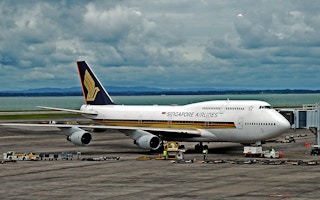
In a push for cleaner skies, Singapore is studying for the first time the feasibility of airlines using alternative fuels.
Singapore Airlines (SIA) and the Civil Aviation Authority of Singapore (CAAS) are doing the joint research, with the aid of hired consultants.
They will look into the benefits, requirements and cost of using alternatives, a CAAS spokesman told The Straits Times.
The study, expected to start later this year, should take about six months. The cost has not been finalised.
Whether the intention is to eventually draft policies to require or encourage Singapore carriers to make the switch is premature to say, industry observers said.
SIA spokesman Nicholas Ionides said the new collaborative effort will take the studies it has done on its own to the next level.
Its move is also in concert with the International Air Transport Association’s (Iata) global drive to get airlines to eventually switch from fossil fuels like oil to alternative sources, namely biofuels, which cause less pollution.
It will help to further reduce the industry’s carbon emission, which is about 2 per cent of man-made greenhouse emissions currently.
But it wants to do better. Said Iata’s assistant director of environment (technology), Mr Thomas Roetger: “We must put in place appropriate steps to further limit and reduce carbon emissions.”
Iata has pledged that from 2020, the industry will achieve growth without increasing its carbon emission. By 2050, the target is for its carbon emission to be half that of 2005.
The focus on biofuels follows the significant strides made by the industry in recent years in reducing its carbon footprint, Mr Roetger said, citing the investment in more fuel-efficient planes and air traffic service providers helping to shorten flight times.
Biofuels used in aviation are typically extracted from plant sources that are not used in food, such as algae.
Since 2011, they have been certified safe for planes when used with today’s jet fuel. Further studies and tests are being done on whether a complete switch is safe.
Sixteen airlines have tried out the mix since then, completing more than 1,500 commercial passenger flights. The carriers include Air France, Air China and Thai Airways.
SIA has not done any such test flights.
The biggest obstacle to the widespread use of biofuels is price, which is almost double that of jet fuel, Mr Roetger said.
But he foresees prices falling in the coming years as demand grows and suppliers achieve economies of scale.
Iata is also talking to governments on how they can incentivise the use of alternative fuels for aviation, he said.
Mr Ionides shares his vision: “The way forward is to ensure there is enough supply and ready infrastructure to support the deployment of alternative fuels in an economically viable manner.”
CAAS, SIA to study alternative fuel use
Terpopuler
-
![Carolyn Lim, head of sustainability operations, Golden Agri-Resources]()
Berita / Pangan & Agrikultur
Musim Mas stalwart Carolyn Lim joins palm oil rival Golden Agri-Resources
Lim has joined GAR to lead sustainability operations. Rob Nicholls has also left Musim Mas after several years … -
![TLC Grand Finale at MBS]()
Berita / Karbon & Iklim
Eight global climate tech start-ups to vie for S$4M in funding at The Liveability Challenge 2026
Ideas to keep cities cool and slash emissions were shortlisted in a record-breaking year for entries. -
![Solar desalination plant in Saudi Arabia]()
Opini / Air
Iran’s water weapon against the Gulf
While the rest of the world is mainly concerned about the energy disruptions caused by the Iran war, … -
![A farmer putting fertiliser in a rice field in Central Vietnam]()
Berita / Transportasi & Logistik
Prices of Asia-Pacific’s fertilisers, petrochemicals set to surge on Iran war: ADB
The war's economic impact extends beyond oil production to include global food and industrial supply chains, as fertiliser … -
![CANSEA press conference]() As oil and gas firms reap windfall profits from wartime price spikes, regional climate advocates urge governments to …
As oil and gas firms reap windfall profits from wartime price spikes, regional climate advocates urge governments to … -
![vietnam farmers peanut]()
Opini / Pangan & Agrikultur
Securing Asean’s food resilience amid the Middle East conflict
The Middle East conflict will have a double-whammy impact on Asean’s fertiliser imports and energy-intensive fertiliser production. The …