Asia Pacific‘s leading platform for sustainable development
#activism 新闻

Activists warn a new US-Indonesia trade deal could accelerate mining, deforestation and fossil fuel use, with weak, nonbinding environmental safeguards.

Two upcoming projects aim to push the country’s EV industry forward – but without changes to the law, experts fear they could perpetuate local harms.

The state has seen protests in several villages over development projects and a pro-construction law local people say threatens their wetlands.

The CEO of the environmental law charity said suing corporate polluters is not the way to drive impact in Asia, where it focuses on capacity building. The organisation currently has 20 staff in the region.
#activism 观点

碳与气候
Trump’s EPA decides climate change doesn’t endanger public health – the evidence says otherwise
The Trump administration’s arguments in dismissing the health risks of climate change are not only factually wrong, they’re deeply dangerous to public health and safety.

Progress is fragile and 2026 must be the year of action and accountability on gender rights.

Economic liberalisation in India has shifted the emissions burden from more equal and developed states to less equal ones. This needs to change.

碳与气候
COP30: five reasons the UN climate conference failed to deliver on its ‘people’s summit’ promise
From Indigenous exclusion to the absence of the United States, a range of factors contributed to another disappointing outcome at the climate talks in Brazil.
#activism 视频

NGOs urged the government to improve forest data transparency by making maps of protected areas publicly available, and to channel funds to frontline communities living near forests.
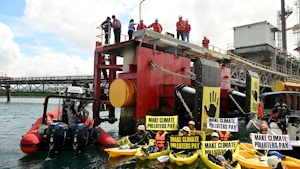
The action comes despite the oil giant suing the environmental group for US$2.1 million after demonstrators boarded the company’s vessel at the Atlantic Ocean in January.
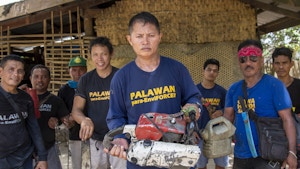
The veteran journalist talks to Eco-Business about how his Emmy-nominated documentary depicts the lives of environmental crusaders in Asia's deadliest country for guardians of the seas and forests.
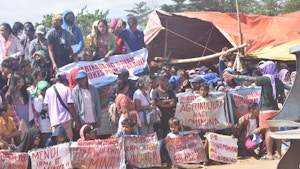
Video footage appears to show protestors, who were demonstrating against mining operations, being dragged away by police near Ipilan Nickel Mine in Brooke’s Point, Palawan. Mining insiders are calling for maximum tolerance in similar standoffs.
#activism 播客

政策和金融
‘We don’t want to pit adaptation and loss and damage funds against each other’: veteran COP observer
At the close of COP30, nations agreed to triple adaptation finance by 2035, while the fund for loss and damage appeared to remain sidelined. Lidy Nacpil, a long-time attendee of the climate conference, explains why.

The chief of a Manila-based nonprofit that advocates for climate finance transparency tells the EB Podcast that so-called Filipino resilience to natural disasters should not be an “excuse” for developers to dodge accountability for substandard flood control projects.

Former United Nations policy analyst and sustainability consultant John Pabon tells the EB Podcast how Australia became Asia Pacific's most progressive country in holding green claims to account.

Speaking from the INC-5.2 talks in Geneva, the Singapore Youth for Climate Action president argues that having no treaty is better than a watered-down pact with no limits on plastic production. But there is no explicit Asean-wide support for such caps now, she observes.
#activism 新闻发布稿

UN Environment Programme (UNEP)
UNEP seeks young people with big ideas to protect the planet


Clean Arctic Alliance
NGOs call on UN shipping body to reduce underwater noise impact on marine life





Receive the latest insights daily or weekly.
战略组织