
For coastal communities around the Cirebon coal complex in Indonesia’s West Java, the removal of a proposed third plant from the country’s latest electricity plan marks a hard-won victory after years of resistance to further coal expansion.
For these fishing and salt-farming families in Mundu Bay, a just transition means more than stopping new coal or shifting to another fossil fuel such as liquefied natural gas (LNG) – it means having a real say in decisions that affect their livelihoods, health and environment.
“[Processes] should involve the local community from the very beginning – not only as the object of the project, but as rights holders. They have the right to say no,” Dwi Rahayu Ningrum, Head of Sustainable Development at policy advocacy institution The PRAKARSA and ResponsiBank Indonesia, told Eco-Business.
Southeast Asia is running out of time to align its coal transition with global climate goals, with fragmented national policies threatening to lock the region into decades of fossil fuel dependence even as financing for new coal plants declines.
While Association of Southeast Asian Nations (Asean) governments have introduced coal moratoriums, sustainable finance taxonomies, carbon pricing schemes and transition partnerships over the past five years, few have adopted legally binding coal retirement schedules consistent with the Paris Agreement’s goal of limiting warming to 1.5°C, according to the report, Phasing out Coal, Phasing in Justice: Roadmap for financing a responsible regional coal phase-out in Asia, by Fair Finance Asia (FFA) and Influencing Just Energy Transition in the ASEAN (IJET). The study reviewed 15 countries across Asia.

No Southeast Asian country has yet established a fully Paris-aligned coal phase-out strategy, despite a growing patchwork of moratoriums, sustainable finance taxonomies, carbon pricing schemes and transition partnerships across the region. Data visualisation: Kontinentalist and Fair Finance Asia
“The choices made now will determine whether Southeast Asia locks in decades of fossil fuel dependence or demonstrates that a coal phase-out can be rapid, responsible, and fair,” said Bernadette Victorio, Program Lead at FFA, a network of more than 90 civil society organisations across Asia that advocates for responsible financing that protects people, communities and the environment.
“The test is not only whether coal-fired power plants close, but whether the transition contributes to reducing inequality by protecting the rights and giving a voice to affected workers, communities, women, and Indigenous Peoples in a meaningful manner,” she told Eco-Business.
The Intergovernmental Panel on Climate Change has said unabated coal use must fall steeply by 2030 and be completely phased out by 2040 to keep the 1.5°C target within reach. Yet coal remains deeply embedded in Southeast Asia’s energy systems. As of 2024, it accounted for nearly 110 gigawatts (GW) of installed generating capacity, making it one of the region’s dominant sources of electricity.
Indonesia’s central role in the region’s coal economy illustrates the scale of the challenge. In 2023, it became the world’s fifth-largest coal power generator, overtaking South Korea for the first time. Meanwhile, the Philippines remained the world’s 17th-largest coal market, behind Vietnam and Malaysia in installed capacity but ranking eighth globally in the share of electricity generated from coal.

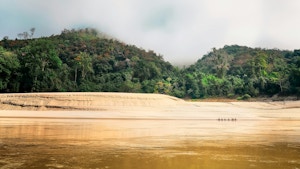
Indonesia’s Cirebon 1 plant was meant to become the first coal facility retired through the Energy Transition Mechanism, potentially closing around seven years early. The government dropped the plan in late 2025, exposing the difficulty of turning regional coal-transition commitments into actual plant closures. Image: Kasan Kurdi / Greenpeace
Policy momentum outpacing implementation
The study concludes that no Asean country has yet established a fully Paris-aligned coal phase-out strategy.
Indonesia has emerged as a policy frontrunner through its Just Energy Transition Partnership (JETP), carbon tax legislation and sustainable finance taxonomy, but converting those commitments into coal retirements has proved difficult.
Launched in November 2022, Indonesia’s JETP brought together the government and an International Partners Group of donor countries, with private financing coordinated through the Glasgow Financial Alliance for Net Zero. It initially mobilised a US$20 billion commitment and set targets including a 44 per cent share of renewable electricity generation by 2030 and net zero power-sector emissions by 2050.
The partnership has since faced setbacks. The United States withdrew in early 2025, although remaining partners stayed on and pledged financing reached US$21.4 billion by September 2025. Coal plant closures, however, have lagged.
Indonesia’s implementation gap is also evident in its broader coal commitments. President Prabowo Subianto’s 2024 pledge to retire all coal plants by 2040 has not been turned into binding policy and was absent from the country’s Second Nationally Determined Contribution submitted to the United Nations Framework Convention on Climate Change (UNFCCC) in 2025.
The original JETP plan also excluded captive coal from its on-grid power targets, while Indonesia’s sustainable-finance taxonomy still allows some captive coal plants to qualify as transition activities.
Those difficulties were laid bare by the collapse of plans to retire the 660 MW Cirebon 1 coal-fired power plant early.
Operated by PT Cirebon Electric Power and state-owned utility PT PLN, the Cirebon 1 power plant within the wider Cirebon coal complex has become a test case for coal phase-out efforts in Indonesia and across Southeast Asia, with its planned early-retirement deal ultimately falling through in late 2025.
“
Asean needs a coordinated coal transition framework with common guardrails: no new coal, Paris-aligned retirement timelines, responsible transition finance, transparency and disclosure requirements, and effectively implemented social and environmental safeguards.
Bernadette Victorio, Program Lead, Fair Finance Asia
Cirebon 1 was intended to become the first coal plant retired under the Energy Transition Mechanism (ETM), a scheme championed by the Asian Development Bank (ADB) to blend concessional and commercial capital to accelerate coal plant closures and replace fossil generation with cleaner energy.
In 2023, project partners signed an agreement with Cirebon Electric Power to explore retiring the plant by 2035, around seven years ahead of schedule, in what was intended to become a model for other Indonesian coal plants.
But in late 2025, the Indonesian government dropped the early-retirement plan, dealing a blow to one of the region’s most closely watched coal retirement experiments.
“Even now, following the reported cancellation of the plan, the government has not provided a clear plan of action to the public,” Wahyudin Iwang, Regional Executive Director of the environmental group WALHI West Java, told Eco-Business.
Yuki Tanabe, Programme Director at Japan Center for a Sustainable Environment and Society and Lead of Fair Finance Guide Japan, said the case of Cirebon 1 highlighted the importance of firm government commitments before early-retirement deals advance.
“The Cirebon 1 coal-fired power plant project – the first under the ETM – has stalled because the Indonesian government [ultimately] did not agree to it,” Tanabe said. “A host country’s commitment to phasing out coal is essential for the success of the ETM, and I believe that, in this instance, there was insufficient verification of that commitment during the pre-negotiation stage.”

For communities living alongside coal projects, consultation alone does not guarantee participation. Civil society groups say affected people must receive accessible information and have meaningful opportunities to influence decisions - including the right to reject projects that threaten their livelihoods, health or environment. Image: Break Free, CC BY-SA 3.0, via Flickr.
The Philippines faces its own implementation gap.
The country maintains a moratorium on new greenfield coal plants and has introduced an ETM initiative, also with ADB, alongside a sustainable finance taxonomy, but exemptions allow some coal development to proceed and the country still lacks a formal national coal phase-out policy.
Despite these measures, the International Energy Agency (IEA) projects the Philippines will remain one of Southeast Asia’s largest coal consumers through 2030, underscoring the gap between policy ambition and continued reliance on coal-fired power.
“The Philippines’ 2020 coal moratorium policy marked a shift in the country’s approach to coal development, particularly by limiting the entry of new greenfield coal-fired power projects. However, the moratorium has a limited scope,” said Andrew Leonardo, Project Lead at Fair Finance Philippines, a country coalition under the FFA programme.
“For instance, it does not cover existing and operating coal plants, including those that have already made commitments for expansion and those that serve off-grid or island areas,” said Leonardo, adding that implementation remains the central challenge.
“The main gap identified by [Fair Finance Philippines] is the disconnect between the country’s relatively strong policy framework and its implementation,” he said.
He added that high upfront costs, weak project bankability, permitting delays, grid constraints and limited technical capacity continue to slow renewable energy deployment.
Vietnam has committed to retiring or converting ageing coal plants, while Cambodia has banned new coal plants but has yet to publish a retirement roadmap. Thailand and Laos still lack binding coal exit policies.
Taken together, the report finds that many Asean countries now have climate targets, transition finance frameworks, and carbon pricing initiatives, yet few have enforceable coal retirement timelines.

A just coal transition requires more than closing power plants. Fair Finance Asia calls for income protection, reskilling and social protection, alongside respect for land rights and Free, Prior and Informed Consent, transparent grievance mechanisms and meaningful participation by affected communities. Data visualisation: Kontinentalist and Fair Finance Asia
Strengthening social safeguards
Experts say the success of Southeast Asia’s coal transition should not be measured solely by the number of plants that close, but by whether workers and communities share in its benefits.
“What is at stake is climate resilience, public health, energy security, economic competitiveness, and financial stability,” said Victorio.
“A responsible coal phaseout must therefore be fast, but also fair. It must be financed, transparent, rights-based, and designed with affected communities as rights holders, not merely beneficiaries.”
Leonardo said many communities remain economically dependent on coal, making poorly planned transitions socially disruptive.
“In many communities, not just in the Philippines, coal is deeply tied to the livelihood of the people and even local government revenues, social identity, and political structures. Sudden or poorly planned transitions can worsen inequality and unemployment,” he said.
Instead, “a people-centred coal phaseout refers to a movement involving affected communities from the start, providing clear and accessible information, and ensuring that the vulnerable sectors – workers, Indigenous Peoples, women, fisherfolk, and farmers – are part of transition planning,” he continued.
Cirebon shows why those safeguards matter even when the stated goal is early retirement.
The tension is heightened by continued coal development elsewhere in the same complex. Cirebon 2, a separate 1,000 MW coal-fired plant, began commercial operations in 2023.
For nearby communities, the debate over retirement is also about the impacts of plants already operating.
“Over the years, pollution from the plant had damaged marine habitats and ecosystems, which meant that fish were no longer as abundant in the areas where local fishers used to fish,” WALHI West Java’s Iwang noted.
Children were among those most vulnerable to the health impacts, Iwang said, with reported problems ranging from skin irritation and headaches to respiratory and lung conditions.
In at least one case, “the doctors confirmed that the health problems the child was experiencing were related to exposure to coal dust from the power plant,” he continued.
“Communities need access to information and genuine opportunities to participate, so they can make informed decisions and determine their own position when projects are being planned in their area,” Dwi of ResponsiBank Indonesia added.
Iwang underscored that formal consultation does not necessarily amount to meaningful participation.
“People may be invited to meetings, given presentations, or consulted, but the process does not necessarily provide them with meaningful opportunities to participate or influence decisions,” Iwang said.

Financing for new coal projects has fallen sharply across Southeast Asia, but capital is increasingly changing hands rather than disappearing. As international lenders restrict coal exposure, domestic financial institutions are playing a larger role in keeping projects funded. Data visualisation: Kontinentalist and Fair Finance Asia
Coal finance and domestic funding
FFA’s report found that the decrease in international financing for coal projects does not necessarily mean that financing is drying up.
Between 2020 and 2025, the number of coal power plants receiving financing fell from 10 plants comprising 30 generating units to just two plants with seven units. Coal-generating capacity receiving financing also declined from nearly 11,695 megawatts (MW) in 2020 to 2,400 MW in 2025.
But rather than signalling the end of coal investment, the report finds that financing is increasingly changing hands.
Following sustainability-linked restrictions adopted by international lenders, domestic financiers have become more prominent in supporting coal projects.
Cambodia and Thailand have not seen financing of new coal assets since 2020, while coal projects in Laos and the Philippines are now financed primarily by domestic institutions.
Across the region, 56 per cent of 128 financier involvements identified between 2020 and 2025 were international, with China accounting for the largest share, according to the report. However, the study found no direct Chinese coal project financing after 2023, following the country’s pledge to end overseas coal financing. However, FFA cautioned that broader corporate and indirect financing through intermediaries may still support coal-related activities.
While international coal finance retreats, domestic capital could prolong coal dependence unless governments establish clear retirement pathways and redirect investment towards clean energy.
FFA’s report emphasised that financial institutions should move beyond restricting new coal projects and instead finance the managed retirement of existing assets while supporting affected workers and communities.
Financing is another hurdle.
ResponsiBank Indonesia’s Dwi said Indonesian state-owned lenders remain exposed to coal even as the government seeks financing for the energy transition.
“The state-owned banks in Indonesia still have a big portfolio in coal financing, and it is challenging for us to engage with them,” she said.
She noted that ResponsiBank Indonesia has instead engaged Indonesia’s Financial Services Authority, or Otoritas Jasa Keuangan (OJK), lobbying for more sustainable-finance rules, climate disclosure and stronger safeguards for transition projects.
Dwi also said current financing structures tend to favour large developments over locally led renewable projects.
“The current financing mechanism is focusing on large projects, not on small-scale renewable energy projects initiated by communities,” she said. “For small-scale projects, they are being seen by lenders as ‘unbankable.’”
Dwi urged Indonesia’s central government to strengthen the capacity of regional development banks so they can finance renewable energy projects, including smaller, locally led initiatives that may struggle to attract funding from larger commercial lenders.

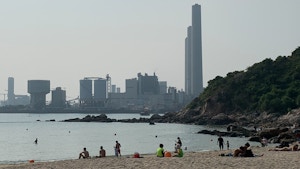
The Philippines has imposed a moratorium on new greenfield coal plants, but exemptions remain and the country still lacks a formal national coal phase-out policy. The IEA expects it to remain among Southeast Asia’s largest coal consumers through 2030. Image: Mscalora, CC BY-SA 3.0, via Wikimedia.
Beyond coal
The report also warns that phasing down coal while expanding other fossil fuels risks replacing one dependency with another.
More than 125 GW of new gas-fired power projects are expected across Asia between 2025 and 2030, according to FFA, which said LNG could create new transition risks through methane emissions, price volatility and stranded assets if new infrastructure is developed without clear sunset timelines.
Fair Finance Guide Japan’s Tanabe said Japanese lenders illustrate the risk of finance moving from one fossil fuel to another.
“Major Japanese banks have stopped extending new loans to coal-related businesses,” Tanabe told Eco-Business.
“On the other hand, new financing for LNG projects continues,” he added.
In West Java, civil society groups have also questioned whether proposed alternatives to conventional coal generation amount to a genuine fossil fuel transition.
WALHI West Java’s Iwang pointed to the emergence of biomass co-firing in Indonesian plants, noting that under current proposals only a small share of coal would be displaced.
“The biomass component is allowed to account for only around 5 to 10 per cent, while around 90 per cent is still coal,” he explained.
He also questioned greater reliance on gas as Indonesia develops its future power mix.
“Gas is also a fossil fuel, so it is difficult to say that the government is genuinely serious about moving away from fossil fuels in the energy sector,” Iwang said.
Rising power demand from Southeast Asia’s data centres and artificial intelligence could also reinforce reliance on coal and gas if renewable generation, storage and grids fail to keep pace.
The World Bank estimates that Indonesia’s data centre capacity will grow 16.8 per cent annually through 2029 to reach 1.41 GW. Across Southeast Asia, data centres could account for up to 30 per cent of national electricity demand by 2030, driven in part by the high cooling needs of tropical climates. They already consume 9.28 per cent of Malaysia’s electricity and are expected to use 19.5 per cent of Singapore’s power this 2026.

Coal remains deeply embedded in Southeast Asia’s power systems, with nearly 110 GW of installed generating capacity in 2024. Indonesia became the world’s fifth-largest coal power generator in 2023, while the Philippines ranked eighth globally for coal’s share of electricity generation. Data visualisation: Kontinentalist and Fair Finance Asia
Turning commitments into a regional response
The region’s coal dependence is also deeply interconnected through trade.
The Philippines, for instance, relies heavily on imported coal to fuel its power sector, with around 98 per cent of its imported coal supply sourced from Indonesia.
“Asean’s coal dependence is regional, not just national,” Victorio said. “Countries are connected as coal exporters, importers, project hosts, financiers, industrial users, and power consumers.”
The report’s financing data shows that those risks can shift rather than disappear, with domestic institutions taking a larger role as international lenders retreat and coal importers remaining exposed to supply decisions by exporters such as Indonesia.
“Asean needs a coordinated coal transition framework with common guardrails: no new coal, Paris-aligned retirement timelines, responsible transition finance, transparency and disclosure requirements, and effectively implemented social and environmental safeguards,” Victorio said.
The report similarly recommends governments adopt legally binding coal retirement schedules, prohibit all new coal development, end financing across the coal value chain and require remediation plans for retired coal sites.
The FFA report recommends that governments and financial institutions embed measurable just transition safeguards into coal retirement programmes, including income protection, reskilling, social protection, respect for land rights and Free, Prior and Informed Consent, alongside transparent grievance mechanisms and meaningful civic participation.
The report underscored that the next phase of Southeast Asia’s energy transition will depend less on announcing new climate targets than on implementing them.
It proposes a seven-step framework for financial institutions, beginning with an immediate end to financing coal expansion, followed by commitments to phase out thermal coal by 2040, financing early retirement of existing plants, requiring credible transition plans from clients and publicly reporting progress.
For Tanabe of Fair Finance Guide Japan, that shift will also require governments and financial institutions in major capital-exporting economies such as Japan to address their own role in prolonging fossil fuel use across the region.
“Efforts are needed to secure commitments from host countries to phase out coal. To this end, it is essential for the Japanese government, as a major shareholder [of several multilateral development banks], itself to clearly define a deadline for phasing out coal and demonstrate its own commitment,” he said.
Tanabe noted responsibility extends beyond the Japanese government.
“The Japanese government should clearly define a deadline for phasing out coal and halt support for new oil and gas projects that conflict with the goals of the Paris Agreement,” he explained.
He also called for greater transparency around coal retirement negotiations.
“Information disclosure should be the principle, rather than conducting early retirement negotiations behind closed doors,” he said.
FFA said the next five years will determine whether Southeast Asia can translate policy ambition into emissions cuts.
For governments, financiers and businesses alike, the challenge is no longer whether coal will eventually decline, but whether Southeast Asia can reduce one of the world’s most coal-dependent regional power systems quickly enough – and fairly enough – to avoid locking in decades of emissions, stranded assets and growing climate risks, warns FFA’s Victorio.