
Asia Pacific‘s leading platform for sustainable development
#activism Berita

Research suggests that children who grow up closely connected to their surroundings can develop sophisticated understandings of their local environment.

The EV revolution has reached Mumbai’s iconic red public buses, but has come with contracts that push drivers’ incomes and safety into precarity.

Indigenous groups in Indonesia are petitioning the country’s Constitutional Court to invalidate parts of a 2024 conservation law, arguing it could allow the government to designate ancestral lands as conservation areas without communities’ consent and threaten their customary land rights.

Polisi & Kewangan
Q&A: AI governance must respect Indigenous peoples
Chadian environmental activist Hindou Oumarou Ibrahim talks about Indigenous perspectives on AI.
#activism Pendapat

Karbon & Cuaca
Can adaptation accelerate climate action?
After a summer of apocalyptic headlines, a new survey finds that people across the political spectrum are deeply concerned about preparing for the effects of global warming. The adaptation imperative may end up being the kind of crisis that forces us to stop neglecting the green agenda and act at the necessary scale.

Karbon & Cuaca
Trump’s EPA decides climate change doesn’t endanger public health – the evidence says otherwise
The Trump administration’s arguments in dismissing the health risks of climate change are not only factually wrong, they’re deeply dangerous to public health and safety.

Bandar-bandar
What happened to gender equality in 2025
Progress is fragile and 2026 must be the year of action and accountability on gender rights.

Polisi & Kewangan
India’s climate diplomacy must account for domestic inequalities
Economic liberalisation in India has shifted the emissions burden from more equal and developed states to less equal ones. This needs to change.
Polisi & Kewangan
Governments are failing environmental defenders. COP30 must act
Polisi & Kewangan
Indigenous women leaders at COP30: Listen to us as equals
Bandar-bandar
Gen Z’s challenge to elite dominance in South Asia
#activism Video

In this second episode of Eco-Business’s Resilience podcast series, Singapore's Senior Minister of State Janil Puthucheary and youth sustainability advocate Man Jing Kong dives into what resilience means for the city-state with Jessica Cheam. Watch as they discuss everything from climate adaptation to mental health and building public trust as an AI-driven economy reshapes daily life.

Karbon & Cuaca
More forest protection and financing needed in 13th Malaysia Plan, say environmental groups
NGOs urged the government to improve forest data transparency by making maps of protected areas publicly available, and to channel funds to frontline communities living near forests.
Karbon & Cuaca
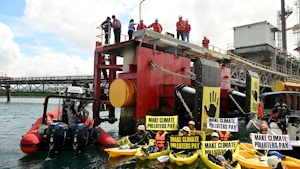
Greenpeace activists block Shell facility in Philippine port to demand climate reparations
The action comes despite the oil giant suing the environmental group for US$2.1 million after demonstrators boarded the company’s vessel at the Atlantic Ocean in January.
Polisi & Kewangan
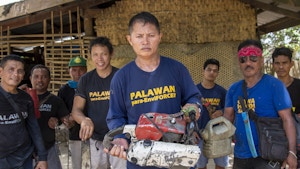
‘Environmental defenders are the glue of the Philippines’ democracy’: Delikado director Karl Malakunas
The veteran journalist talks to Eco-Business about how his Emmy-nominated documentary depicts the lives of environmental crusaders in Asia's deadliest country for guardians of the seas and forests.
#activism Audio
In this second episode of Eco-Business’s Resilience podcast series, Singapore's Senior Minister of State Janil Puthucheary and youth sustainability advocate Man Jing Kong dives into what resilience means for the city-state with Jessica Cheam. Watch as they discuss everything from climate adaptation to mental health and building public trust as an AI-driven economy reshapes daily life.

Polisi & Kewangan
‘Show me the money’ – this is what sustainability has become: CIMB CSO Luanne Sieh
The Malaysia-headquartered bank's sustainability chief tells the EB Podcast about the discipline's mandate to prove value, wrestling with NGOs, and greenwashing in finance.

Former Yale-NUS environmental social sciences professor Michael Maniates tells the Eco-Business Podcast that individual actions like going vegetarian, reducing plastic use or avoiding air travel are not only insufficient to address the climate crisis – they are counterproductive.

Polisi & Kewangan
‘We don’t want to pit adaptation and loss and damage funds against each other’: veteran COP observer
At the close of COP30, nations agreed to triple adaptation finance by 2035, while the fund for loss and damage appeared to remain sidelined. Lidy Nacpil, a long-time attendee of the climate conference, explains why.
#activism Siaran Akhbar


UN Environment Programme (UNEP)
UNEP seeks young people with big ideas to protect the planet


Clean Arctic Alliance
NGOs call on UN shipping body to reduce underwater noise impact on marine life
#activism Penyelidikan

WWF International
Behaviour change—save nature please




Receive the latest insights daily or weekly.
Organisasi Strategik


