
Asia Pacific‘s leading platform for sustainable development
#NGOs Berita

A new study in Bali found that coral reefs continue to decline at one of the island’s major tourism hubs, despite multiple efforts to rehabilitate them.

The Bajau people of Indonesia, Malaysia and the Philippines have traditionally harvested the sea through freediving.

Kebijakan & Keuangan
Indonesia turns to Indigenous data to map customary lands
The Indonesian government has integrated data from its Ministry of Culture, the Ancestral Domain Registration Agency and AMAN, the country’s largest Indigenous peoples’ alliance, to build a new dataset covering 3,857 Indigenous communities.

Kebijakan & Keuangan
Cambodia cracks down on social media wildlife trade, but gaps remain
Cambodia’s environment ministry has called on content creators and social media users to stop posting content that promotes the online sale of wildlife products, to tackle the illegal wildlife trade in the country.
#NGOs Opini

Connecting communities that protect their coasts can yield huge benefits but funding is not flowing to the right places.

Kebijakan & Keuangan
Why ‘green’ can no longer sit apart from industry, trade in Indonesia
Green policy targets environmental outcomes, while industry and trade focus on jobs and growth. When misaligned, green efforts stall and competitiveness weakens.

Kebijakan & Keuangan
A message from Islamabad to New York: The demand for tax justice is an unstoppable global tide
On 27 January, a landmark ruling on high-earning individuals and large corporations by Pakistan's newly-established Federal Constitutional Court provided a "powerful blueprint" in seeking an overhaul of the international tax system.

Kebijakan & Keuangan
How international aid groups are dealing with the pain of slashed USAID funding
Trump’s dismantling of USAID and deep foreign aid cuts are forcing international NGOs to shrink, localise and seek new funding models – with profound consequences for global health and humanitarian work.
Karbon & Iklim
How insurance can transform our resilience to climate shocks
Kebijakan & Keuangan
Governments are failing environmental defenders. COP30 must act
Kebijakan & Keuangan
Financing for development must account for women
#NGOs Video

Kebijakan & Keuangan
Can carbon markets be a lifeline for Indonesia’s threatened biodiversity?
As Jakarta tightens carbon rules and launches its national registry, speakers at Unlocking capital for sustainability Indonesia 2026 discuss this critical question.
Kebijakan & Keuangan
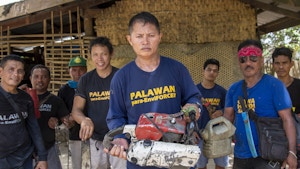
‘Environmental defenders are the glue of the Philippines’ democracy’: Delikado director Karl Malakunas
The veteran journalist talks to Eco-Business about how his Emmy-nominated documentary depicts the lives of environmental crusaders in Asia's deadliest country for guardians of the seas and forests.
Kebijakan & Keuangan
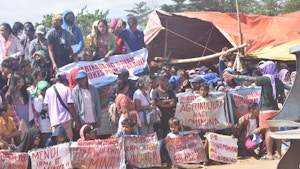
As anti-mining protests heighten in the Philippines, industry observers call for ‘prudence’ in police intervention
Video footage appears to show protestors, who were demonstrating against mining operations, being dragged away by police near Ipilan Nickel Mine in Brooke’s Point, Palawan. Mining insiders are calling for maximum tolerance in similar standoffs.

Karbon & Iklim
Jane Goodall returns to Tanzania for tree-planting mission
Dr Jane Goodall, known for her pioneering study of chimpanzees nearly 60 years ago in Tanzania, continues her work to conserve nature in Africa by joining an expedition to protect the continent’s highest peak.
#NGOs Podcasts

Karbon & Iklim
‘Resilience is not a buzzword’: Palm oil leaders call for industry reset amid global shocks
In the inaugural episode of Eco-Business's new Resilience podcast series, industry leaders say the palm oil sector's ability to weather disruption will depend not on certification alone, but on rethinking the relationships that underpin the entire supply chain.

Kebijakan & Keuangan
‘We don’t want to pit adaptation and loss and damage funds against each other’: veteran COP observer
At the close of COP30, nations agreed to triple adaptation finance by 2035, while the fund for loss and damage appeared to remain sidelined. Lidy Nacpil, a long-time attendee of the climate conference, explains why.

The chief of a Manila-based nonprofit that advocates for climate finance transparency tells the EB Podcast that so-called Filipino resilience to natural disasters should not be an “excuse” for developers to dodge accountability for substandard flood control projects.

Kebijakan & Keuangan
How can NGOs tackle taboo subjects like human rights in Singapore?
Civic groups charge that an anti-foreign interference bill will muzzle civil society. How can activists safely advocate for human rights? Eco-Business asked Vanessa Ho from Project X and Fair Finance Asia's Bernadette Victorio.
#NGOs Rilis Pers

United Nations Economic and Social Commission for Asia and the Pacific
Beneath warming seas, communities are helping reefs recover


Haribon Foundation
Local communities lead biodiversity protection in Aklan watershed

Accountability Framework initiative (AFi)
NGOs launch new tool to help financial institutions address deforestation and human rights risks


Health Care Without Harm Southeast Asia
Lao government, international NGOs lead efforts to strengthen climate resilience in health sector





Receive the latest insights daily or weekly.
Organisasi Strategis