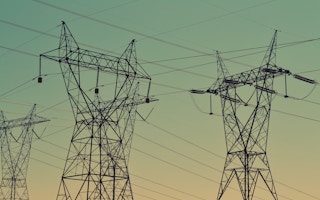
The idea for an interconnected Asean Power Grid (APG) may be more than two decades old, but the time is ripe for an in-depth study to be conducted on its decarbonisation pathways, say experts.
“Asean has to give the mandate to the Asean Centre for Energy (ACE) to undertake such a study,” said Professor Woo Wing Thye, head of the United Nations Sustainable Development Solution Network’s Kuala Lumpur office.
“After having such a study, then (the countries) can choose among the different ways of achieving decarbonisation,” he told Eco-Business on the sidelines of a conference in May to discuss the decarbonisation and digitalisation of Asean’s energy sector.
ACE is an intergovernmental organisation that serves as an energy think tank to the group of Southeast Asian group of countries. Under Malaysia’s Asean chairmanship this year, ACE is focused on advancing Asean’s Renewable Energy Long-term Roadmap, with work being executed by the organisation’s Renewable Energy Sub Sector Network.
ACE executive director Abdul Razib Dawood said at the same event that the centre has been “tasked to achieve a breakthrough on the APG” this year. He added that while the organisation is well equipped to run optimisation studies for decarbonisation of the region’s power grid, it needs the mandate of Asean leaders to complete the scenario planning.
Eco-Business has reached out to ACE on the suggestions highlighted by experts. At the time of writing, ACE has yet to confirm on whether it has a mandate to conduct the suggested study.
John Thwaites, chair of the Monash Sustainable Development Institute and Climateworks Australia, said that there are “real opportunities for economic growth and for emission reduction through interconnections” in Asean.
“(An) interconnection means that where there is a surplus of power, it can be transferred to where there is a deficit of power,” he said. “It also provides (energy) security and it ensures that we can meet our climate targets.”
“I don’t think we are going to meet our climate targets unless there is a boost to interconnection both within countries and across countries. It’s much more efficient, it will provide more affordable energy and cleaner energy,” added Thwaites.
Most Asean countries currently aim to achieve net zero emissions by 2050. Indonesia has said that it plans to achieve net zero by 2065, while Thailand is mulling a faster pathway for decarbonisation by bringing forward its deadline to 2050, compared to a previous 2065 target.
Asean countries must consider how they can achieve their nationally determined contributions (NDCs) to the Paris Agreement in a way that is affordable and fair, said Woo.
The cheapest way to go about decarbonising the region’s energy sector would be for Asean to work together as a group, said Woo. This would ensure that countries with abundant supply of renewable energy can produce electricity at a lower cost and trade with neighbouring countries which have higher energy demand.
“For instance, to produce solar energy in Singapore would cost a lot more than producing green energy on the other side of the Causeway, (in Malaysia),” Woo said, as he highlighted the city-state’s land scarcity as a limitation.
Fortunately, efforts to decarbonise the APG align with the region’s goals of economic growth and increased energy supply, said Lisa Sachs, director of the Columbia Center on Sustainable Development.
“The main project that Asean needs to realise is the interconnected grid as the backbone of an integrated energy system which will include industrial hubs, low carbon corridors, the production of electric vehicle batteries (and) the production of the core components of the energy system,” she said.
“All of this will lead to an incredibly large competitive industrial strategy for the region, and it should be based on an integrated low carbon grid,” said Sachs.
Alongside the physical interconnectors, Woo also noted the importance of regional agreements allowing the trade in electricity across Southeast Asian countries.
Among the more prominent recent examples of established interconnections in the region is the Lao PDR-Thailand-Malaysia-Singapore Power Integration Project, which carries renewable hydropower from Lao PDR to Singapore. However, financiers have said that at least US$100 billion will be needed to build more transmission lines for the Asean Power Grid.
Watch the video to hear what experts think Asean needs to decarbonise its power grid, available on LinkedIn or Instagram.