Asia Pacific‘s leading platform for sustainable development
Opinion / #energy transition
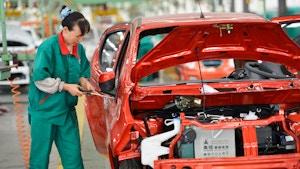
If the current war creates a prolonged oil crisis, there will be more downward pressure on oil use – and an equal acceleration in China of electric car production at home, with an associated surge in exports.

The global surge in oil prices due to the Strait of Hormuz closure threatens to deplete the Philippines’ fund that helps provide subsidies for fuel used by off-grid communities. A transition to more renewable energy offers benefits.

Now is the time to double down on renewable energy and electrification.

Karbon & Iklim
Rethinking Malaysia’s path to net zero
Carbon credits to be tabled under Malaysia’s new climate change bill should serve as a bridge towards decarbonisation rather than a substitute for it.
Semua #energy transition Opinion
27 Februari 2026

Kebijakan & Keuangan
Rethinking coal phase-out in Asia and beyond
20 Februari 2026

10 Februari 2026


4 Februari 2026

26 Januari 2026

21 Januari 2026

Karbon & Iklim
As climate diplomacy stalls, the economics are racing ahead
16 Januari 2026

Kebijakan & Keuangan
The AI we need for sustainable infrastructure
24 Desember 2025

Karbon & Iklim
‘They invite us to speak, but not to decide’
22 Desember 2025

18 Desember 2025

Kebijakan & Keuangan
India’s climate diplomacy must account for domestic inequalities
16 Desember 2025

15 Desember 2025

Kebijakan & Keuangan
This year’s climate talks saw real progress – just not on fossil fuels
24 November 2025

15 November 2025

Karbon & Iklim
How to measure climate progress
13 November 2025

Karbon & Iklim
From Rio to Belém: The long unravelling of climate consensus
Terpopuler
-
![A solar technician in Thailand]()
Berita / Energi
Asean could meet new power needs with solar at US$67 billion, as gas prices surge: study
Solar offers the region a cheaper path to meet new power demand by cutting costs by half compared … -
![CDL's microforest at City Square Mall]()
Berita / Perkotaan
Singapore real estate firm eyes growth for microforests to combat urban heat
CDL has doubled the size of a microforest planted at a shopping mall, and is aiming to plant … -
![A man shelters from the midday heat on the path at Robertson Quay, Singapore]()
Berita / Karbon & Iklim
Singapore logs hottest, wettest months ever in 2025, as Earth’s climate balance slips
Heat stress readings shattered records in Singapore, reflecting the world's hottest decade on record according to the World … -
![An attendant puts up the price of fuel]()
Berita / Energi
Philippines declares ‘national energy emergency’ amid Iran war as it boosts coal output
Philippine president Ferdinand Marcos, Jr made the declaration to empower officials to crack down on fuel hoarding and … -
![An installation in Singapore's FairPrice supermarket chain]()
Berita / Pangan & Agrikultur
Methane is a blind spot in Asian supermarkets’ climate strategies, study finds
Retailers in China, Japan, South Korea and Singapore were assessed on efforts to curb methane from meat, dairy … -
![Migrant women at risk of violence and exploitation]()
Opini / Tanggung Jawab Sosial Perusahaan
Trade and sustainability go together as Trump’s tariffs target forced labour
The Trump administration's aggressive use of trade law to address labour issues could better the lives of migrant …





Receive the latest insights daily or weekly.
Organisasi Strategis