
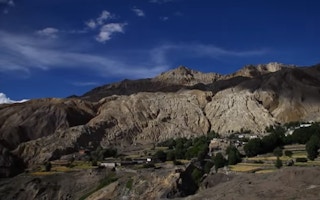

In a trans-Himalayan region that receives less than 200 millimetres of rain a year, erratic rain and snowfall have led to a deepening water crisis.
Already subscribed? Sign in
To continue watching, subscribe to Eco‑Business.
Access all our exclusive content and archive — with a 7-day free trial. Then just US$5/month. Cancel anytime.
- Exclusive access to training across business and policy topics
- Direct access to industry leaders at Eco-Business events
- A seat among the decision makers shaping the region's sustainable development
Known formerly as the Kingdom of Lo, and open to outsiders only in 1992, Upper Mustang still has an air of mystery around it.
Bordering China on the north and situated in the rain shadow of the Himalayas, it is famous for its arid mountains, steep cliffs and dry ochre-coloured landscape.
The region is heavily influenced by Tibetan culture, as is evident by the many monasteries, prayer wheels and Chortens (shrines), spread throughout its villages.