
Malaysia’s growing investment in public transport could transform how people move, especially with the RM 17.6 billion (US$4.3 billion) allocated for transport development in 2026. The caveat – only if it recognises that women travel differently.
Long waits, unsafe routes, and poor last-mile connections continue to limit women’s access to work, education, and care responsibilities. Building gender-inclusive transport systems is not just about safety or convenience; it is about equity, time, and dignity.
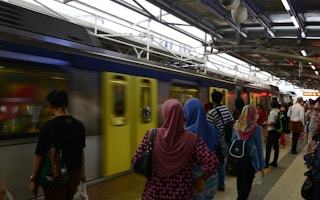
Discussions on gender sensitivity in Malaysia’s public transport often focus on the Klang Valley, which includes the city of Kuala Lumpur and surrounding suburbs, and rapid transit, particularly trains. Women-only coaches introduced in 2010 were a positive step, but far from sufficient. Last-mile connectivity and infrastructure planning still assume that private car ownership will fill gaps, entrenching inequalities between those who can afford personal mobility and those who cannot.
For many women, the day doesn’t end when paid work does. Hours spent on cooking, cleaning, and caring for children or elderly relatives often stretch long into the evening. When public transport is unreliable or inefficient, these pressures only grow - capturing the time that could be spent resting, learning, or simply being present with family.
These realities demand closer investigation if policymakers hope to build transport networks that reflect how people, especially women, actually live and move.
Care, mobility and gender
The recently launched 13th Malaysia Plan posits the care services industry as a new economic growth sector, even framing Malaysia’s potential to become a “regional hub”. However, this market-based approach sidelines informal caregivers and risks deepening inequalities for women who already shoulder the majority of care duties. Rarely are caregiving and mobility discussed in relation to one another despite their interconnectedness in everyday life.
Women’s participation in the workforce has risen, but frameworks to support genuine empowerment have not kept pace. The World Bank reports that when transport systems fail to account for women’s safety, care needs, affordability, and connectivity needs, their access to education, healthcare, and employment is reduced – making inclusive mobility a key driver of women’s social and economic mobility.
This gap is most visible in the everyday journeys women make. Take the practice of “trip chaining”, combining multiple stops in a single outing. Studies show women are more likely than men to do this. A single trip might include dropping children at school, commuting to work, stopping at the market, visiting an elderly parent, and returning home.
In Kuala Lumpur, where women make up 60 per cent of public transport users, urban transport systems are rarely designed for this complexity. Patchy connectivity, unsafe pavements, and limited last-mile options make such trips exhausting and risky.
Free time is often overlooked, yet it is essential for exercising rights, accessing information, and pursuing personal growth. Irregular, unreliable public transport and expensive single fare tickets fares all combined with unpaid care work, shrinks women’s hours for rest or self-development. In many developing countries, limited transport options force women to walk long distances, deepening inequality not just through wages or jobs, but through the erosion of time itself.
Practical solutions
Infrastructure planning must start with detailed, gender-disaggregated data. Time-use surveys could reveal the invisible hours women lose to waiting, transferring, or navigating unsafe routes. Only then can we build systems that respond to lived realities rather than abstract commuter models.
Public transport is not just about engineering, routes, or timetables. It is about whose safety, time, and well-being count in the systems we build. In Bogotá, a safer first and last mile safety audit was conducted following specific parameters around things like lighting, availability of public transport, visibility, crowd, security and gender diversity which informed how the local and municipal investments in infrastructure would be formed.
Likewise, Kerala has introduced critical evaluations of the transport services, including an initiative that establishes a grievance mechanism to address safety concerns.
Malaysia faces a choice: will our transport future continue to privilege cars and a narrow model of commuters? Or can we imagine a system that recognises care as infrastructure, time as a resource, and women’s mobility as central to progress?
A bus or a train is never just a mode of transport. It is a lifeline – one that can either unlock opportunities or shut them off from those who would benefit from them the most. The answer will determine not only how we move through our cities, but who gets left behind.
Wani Nur Imannina is a development practitioner with over five years of experience at the intersections of youth empowerment, gender, and civic participation. She holds an MSc in Development Studies from the London School of Economics (LSE), where she focused on the interplay between economy, trade, climate, and gender.
This op-ed was supported by a writing grant from RimbaWatch; her views are her own and not affiliated with any organisation.